Britain: Third Worldist Police State
This isn’t merely a policing crisis.
I hope everyone enjoyed themselves while I was gone. I had an increasing number of drafts I’d been fixing to complete at some point and though I prefer finishing what I begin, I also think at this point I’ve fallen behind far enough that it’s not worth it to keep trying to do so. Hence, I took advantage of the down time to clear the deck and return with a clean slate. I think it’s for the best, including readers.
This was also the first time something major didn’t happen during my absence, which is actually kind of nice. That doesn’t mean it was an uneventful time, however. We still have plenty to discuss, so let’s begin.
The murder of student Henry Nowak in Southampton has reached a just conclusion:

So all’s well in Britain now, right? Hardly. In fact, the controversy may just now be beginning.
Let’s back up a bit. How did this even happen? Pete North provides a good summary of the incident:
On 3 December 2025, 18-year-old University of Southampton finance student Henry Nowak, who was walking home after a night out in the Portswood area of Southampton, was stabbed five times in the chest and abdomen by 23-year-old local resident Vickrum Digwa, a British-born Sikh. Digwa used a 21cm ceremonial kirpan knife that he carried, notionally as part of his faith. Nowak died at the scene.
Digwa claimed self-defence, alleging that the victim had racially abused him, punched him, and knocked off his turban, but the jury rejected this account after bodycam footage showed Digwa falsely accusing the dying Nowak of attacking him, leading police to initially handcuff the victim. Digwa was convicted of murder and carrying a bladed article; his mother, Kiran Kaur, was convicted of assisting an offender by hiding the weapon.
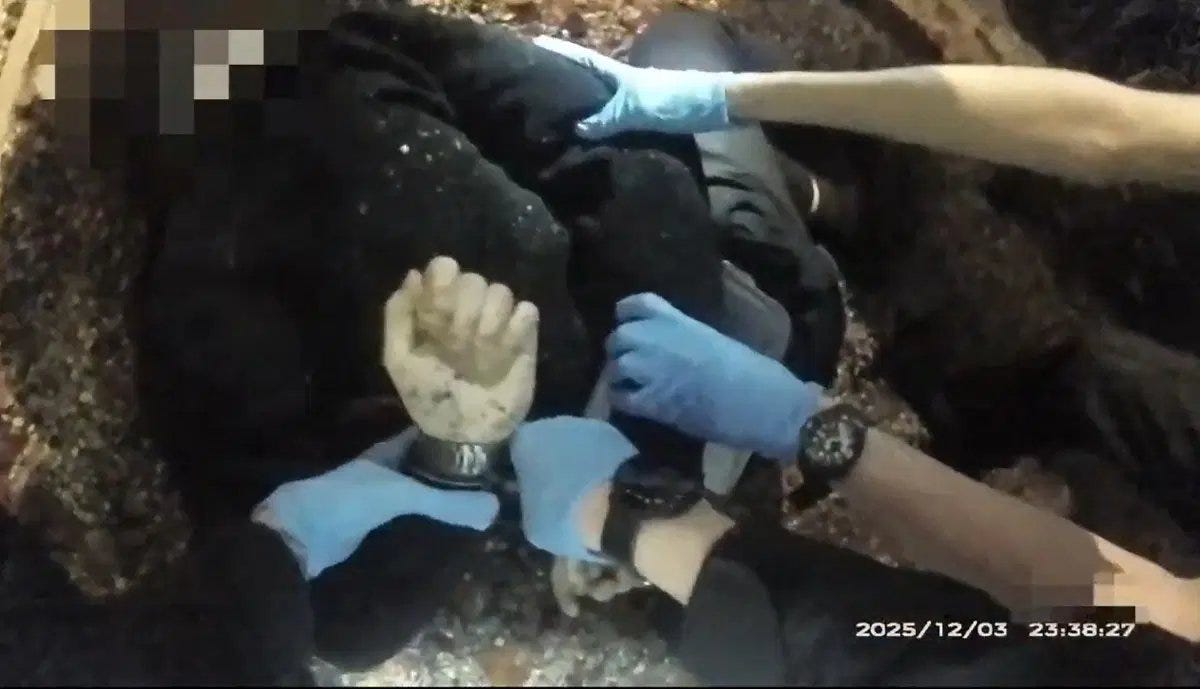
Further fueling outrage is police conduct in response to Nowak’s stabbing. The bodycam footage, which has been publicly released, shows what can only be described as apathetic, at best, or callous, at worst, disregard for Nowak’s welfare.
Watch and see for yourself:

I’ve studied law enforcement for many years. I think I understand how the world appears through their eyes better than most who aren’t in law enforcement. For the life of me, I can’t understand how a police officer can tell a guy to his face “I don’t think you are, mate” without even bothering to check. For all the hate American cops get, I can guarantee you they would’ve at least checked. For all the hate American cops get, not only are they tougher and more authoritative than most police of the world, including that of Britain, they also care enough to do their job the right way.
Hampshire Police - officially known as the Hampshire and Isle of Wight Constabulary - attempted to justify police conduct by saying any different course of action would’ve been insufficient to save Nowak’s life, given the severity of his injuries. Setting aside momentarily what that says about Vickrum Digwa’s murderous intentions, the idea that police action can be justified by the outcome is a precedent rarely cited in liberal democracy. It certainly didn’t help Derek Chauvin or the other officers involved in the death of George Floyd, a case which has drawn comparisons and one we’ll discuss later.
In places like the United Kingdom and the United States, the outcome matters less than how the outcome was achieved. Nothing less than following The Process to a letter renders a just outcome, whatever it might be, goes the thinking. There is logic to this - procedure is a means of keeping things orderly, after all. However, The Process itself cannot be the end. If it’s to be the end, as it so apparently is, then it matters not one bit that Henry Nowak’s injuries were so grievous that nothing short of a miracle would’ve saved him.
Nor can the officers’ actions be justified on a moral and practical level. Are there times where rendering aid, calling an ambulance, aren’t viable options due to the scene not being secure? Yes, absolutely. Was this one of those cases? The bodycam footage suggests otherwise. If you can casually arrest a man who’s exhibiting some form of incapacitation and read him his rights as he goes unresponsive, there’s nothing stopping officers from rendering what aid they can and calling immediately for help.
In fact, it’d be utterly comedic, if it weren’t tragic, of the officers to be reading him his rights as he’s going unresponsive, without even a proper understanding of what took place. Aren’t suspects supposed to understand their rights as they’re being read to them? Even when the officers recognize that medical help is necessary, it’s almost like a mere formality, an inconvenience to be reckoned with. It’s stunning to me the lack of urgency demonstrated when the female officer notes that Nowak’s pupils have gone unresponsive. I don’t expect my cops to panic, but again, there’s no palpable sense of urgency.
It’s like they concluded that Nowak is the hands-down aggressor, someone to be put into restraints, and whatever happens to him afterwards is up to the gods. In some ways, it’s a ritualistic killing. Vikram Digwa used a ceremonial knife, after all. The police are merely the priests who show up to the validate the human sacrifice, and the rights they read Nowak are effectively last rites in a society that has replaced religion of faith with religion of state.
This isn’t merely a policing crisis. This is a social crisis. This is the logical outcome of a society that’s completely lost the thread, where the state exists not to provide, law, order, and public safety, but to act as referees in a game of moral righteousness not even between individuals, but between demographic groups. No, the system hasn’t always been like this. Oppression isn’t the only social dynamic that’s existed throughout history. It’s just one among many. “Disparate outcomes” alone aren’t indicative of bias, discrimination, or any of that. The belief that it is is an article of faith, and if it wasn’t, they wouldn’t allow things like “equity” and “fairness” to take precedence over law, order, and safety.
Liberals themselves make it clear the purpose of the system is what it does, to act as referees in an oppression competition:

Even police leadership make it clear what their real mission is:


Law enforcement can do its job only when they focus on enforcing the law regardless of the racial identity of the parties involved. Otherwise, it’s missing the target, entirely. Mind you, both the far-left and far-right are united in their belief that racial identity matters. One key difference is that the far-left also believes that equality before the law itself is racist, because every group is different, so not all groups can be expected to behave the same way, and expecting them to do so is bigotry and discrimination. It appears British law enforcement has internalized this ideology.
The West as a whole has become a thoroughly ideologized society, top-to-bottom, left-to-right. But Britain is a whole different level of ideologized. At least in America, even liberals still pretend the system does what it’s actually supposed to do and in denial about what it actually does. That’s not the case in Britain. Aside from committed establishmentarians, liberal Britons, along with their Third Worldist allies, believe the system must favor certain groups over native White Britons, and that what happened to Henry Nowak was a bug, not a feature, of the system.
In fact, as someone astutely pointed out, there’s nothing “liberal” or “progressive” about any of this:


Someone else spoke similarly:


The Third World is where this form of justice still prevails. Certainly, there are times when the mob is right. In a modern state where authorities possess a monopoly on violence, however, there still exists a duty to establish order first before assigning guilt. For all its faults, in the U.S., if you kill someone, even justly, police will take you into custody first. The presumption is that the person who did the killing is the one to focus on, because killing is always unlawful until proven otherwise. Apparently, the UK has backslid to where killing another person is par for the course unless proven otherwise.
The promise of civil rights under liberalism is that all people will be regarded equally. This means people will ultimately be judged as individuals, not as members of groups, since there’s supposed to be only one group everyone belongs to - Americans, Britons, etc. In turn, this means that in the face of the mob, the state will protect the individual from it. In practice, not only does this not happen, the civil rights regime as it exists on both sides of the Atlantic exists to perpetuate the rights of favored groups, and favorable mobs will always be favored against the un-favored individual.
In the case of Vikram Digwa, his attempt at exploiting the system failed, rightfully so. But let’s be clear about something: if the race card didn’t work, he would’ve never played that hand. He did so precisely because it has worked in the past and more than enough precedent existed such that he had reason to feel confident it’d work for him. And it did, at first. If Britain was truly a racist country, if the system was truly biased against people like him, would he have even tried? Even if you’re liberal, please don’t overthink it.
There’s nothing anomalous about what happened to Nowak. It fits perfectly into a broader pattern of police failing to do its duty to protect Britons because racism:

I’ve been screaming into the void: it’s well past due for a critical examination of the civil rights regime, well past due for a reassessment of society’s attitude towards racism. Henry Nowak’s death isn’t the catalyst, it’s the culmination of decades of programming which taught generations that racism is the worst crime imaginable, worse than murder or rape, which in turn vary in severity depending on Who? Whom? The fact that Digwa tried playing the card means that doing so worked in the past, so this is yet another example among many over the years of how policing, the most fundamental of state responsibilities, has become thoroughly ideologized.
If racism is the modern West’s fail-deadly (as opposed to fail-safe), not only is it one not available to most, it’s a privilege thoroughly abused by those who have access to it:

I don’t want to peddle the narrative that racism doesn’t exist at all in society. It does, but systemic racism doesn’t. Nor is racism a problem in today’s society. I doubt anyone thinks murder is a problem in either the U.S. or UK, even as murders do happen quite frequently in both countries. The fact is, the demand for racism throughout the West outstrips the supply. If racism really was a problem, there would be no faking it. If people can exploit racism accusations the way Vikram Digwa did, we don’t have a real racism problem, do we?
Back to Peter North, who cautions against thinking this incident will change anything:
But then, as we know, it all soon goes back to normal. As when a psychotic African slaughtered three baby girls, nobody was ever really held accountable and no lessons were learned. We all just went back to tweeting. This might dent Labour’s polling and may influence the outcome of the Makerfield by-election, but institutionally, nothing will change. Nothing ever does. The country is just that little bit more demoralised and fragmented - until the next time.
Meanwhile, we see that the political parties of the right are unable to capitalise on this in any useful way. In a BBC interview, Zia Yusuf was asked “what needs to happen now?”, for which he did not have compelling answers. He rightly noted that the religious exemptions on knives must end along with the dismantling of “anti-white racism”, but this requires a much more in-depth analysis because we have to recognise that the state the police are in is the culmination of decades of political meddling, demoralisation, centralisation, and bureaucratisation. It may even take decades to reverse.
In my view, only a “Bloody Sunday”-type incident, where the state perpetrates the killing of a large numbers of innocents, could ever manage to stir public outrage just enough to start changing minds. We live in a world where the death of a one black or brown person is enough to flip everyone into a frenzy. The death of a single White man can move the needle, but only slightly. Even then, it may not do a whole lot. In an ideological clash, the better argument never wins, nor do facts matter.
The belief that Whites remain beneficiaries of an unjust system that horribly disenfranchises non-Whites still has tremendous currency and will for the foreseeable future. I see nothing, nothing at all, to suggest that public sentiment is in any state of flux. The problem is that the institutions propagate this thinking, our children are still indoctrinated with it. Unless you can change this, nothing else will change. I suppose this is, ultimately, why so many people believe civil war is coming. It isn’t that they honestly think it will, it’s that they see no other way out of this self-destructive spiral.
Henry Nowak Is No George Floyd
In the wake of the verdict, comparisons and contrasts were made to the death of George Floyd in police custody in the U.S.:

He’s not wrong, actually. Henry Nowak, unlike George Floyd, wasn’t a career criminal. In fact, he wasn’t a criminal at all. Unlike Floyd, Nowak was falsely accused. Unlike Floyd, Nowak put up no resistance to arrest, probably because he was suffering from traumatic injury. Unlike Floyd, Nowak hadn’t consumed lethal doses of illicit substances that’d threaten the lives of even healthy adults. On that note, Nowak’s health hadn’t deteriorated due to years of unhealthy lifestyle, drug use, and the stress caused by a life of criminality.
Unlike Floyd, Nowak didn’t resist arrest for minutes on end. To the extent Nowak failed to comply, it was because he was bleeding out, going into shock, meaning it was medically impossible for him to cooperate. Unlike Floyd, it took Nowak going unresponsive before police realized medical attention was needed. Unlike Floyd, police immediately presumed wrongdoing on his part without much sleuthing. Unlike Floyd, Nowak’s death had to be investigated before conclusions were drawn. Unlike Floyd, Nowak receives comparatively less state or social sympathy. He’s just another statistic, whereas Floyd’s death, which was almost entirely by his own hand, was wrongly deemed a crime against humanity.
I’ve said before that I never believed the officers involved in Floyd’s arrest were totally innocent. Even with all the facts on the table, I think when a man goes unresponsive, you need to check up on him. I don’t know whether doing so would’ve been enough to vindicate Derek Chauvin or any of the other officers, but I think a lot of the outrage stemmed from watching Chauvin kneeling on Floyd’s back for several minutes even after he goes unresponsive. I doubt Chauvin thinks he was doing anything wrong, and I don’t believe for a moment he was guilty of murder. But out of prudence, you’ve got to check.
With respect to Henry Nowak, it took officers quite a long time to recognize he was, in fact, in medical distress. In Floyd’s case, officers called for medical assistance the moment it became apparent it was needed, which was while he was still conscious. Police aren’t superheroes and we shouldn’t expect them to know everything upon arrival at the scene. But this is why prudence matters.
A British far-leftist tried to justify police conduct:

You can test a liberal’s commitment to expertise by simply changing the roles around. Any first responder will tell you three minutes is a long time. If someone is suffering from traumatic injury, shock will set in very quickly, as it did in the case of Nowak. That this far-leftist thinks three minutes is a quick response shows that neither expertise nor facts matter. What matters is the narrative, which is that police treat Whites with utmost care and non-Whites with callousness at best, malice at worst. This has never been true.
I don’t think much more needs to be said about the Floyd-Nowak comparisons. I never believed Floyd’s death said much about inequality in policing and I don’t think it has anything useful to say about Nowak’s death, other than that police in Nowak’s death presumed he must be the aggressor because a non-White person said so. If that’s what White privilege looks like, I wonder what White disenfranchisement looks like?
License To Kill
The more we learn about Vikram Digwa, the more damning it gets:


Remember: this is Britain, where gun ownership is all but outlawed. Britons are always lecturing Americans on our “gun violence.” How was Digwa permitted to get away with this? If Digwa wasn’t a person of color, would he have? I strongly doubt it, given how eagerly the British state enforces the law against White Britons.
It gets worse. Here’s a video purportedly of Digwa during a road rage incident:

One thing that quickly becomes clear in these cases is how it all fits into a pattern of behavior. I always tell my audience that nobody wakes up one morning and decides to kill someone. Without going as far as to say Digwa intended to kill someone that day and Nowak was unfortunate enough to end up in his crosshairs I’ll say that this all suggests Digwa not only engages in dangerous, reckless behavior, but he also behaves in a provocative manner. De-escalation isn’t his thing. When they say “An armed society is a polite society,” they’re not telling everyone else to restrain themselves. They’re telling the armed individuals to restrain themselves.
Britain unfortunately has a religious exemption to carrying weapons, one Digwa ruthlessly exploited when he murdered Nowak:


If Britain considers itself liberal, I don’t understand how this exception can be justified, even under the premise of religious freedom. Under liberalism, it’s not entirely a matter that all religious practices will be respected. It’s that they’ll be respected to the extent that it won’t undermine social harmony and order. This is clearly not how it’s been working in practice. If you can’t trust British women to carry pepper spray responsibly in public, the rules of liberalism dictate that Sikhs cannot be trusted to carry their kirpans in public, even if for the most part they do so responsibly.
I don’t have room to discuss this in great detail, not in this post, but liberal democratic multiculturalism is actually oxymornic. The religious exemption which permitted Digwa to carry around his kirpan makes absolutely no sense whatsoever. It doesn’t just contradict laws prohibiting weapons possession, it invalidates it. It trusts that Sikhs will always act responsibly with their knives, which, again, they do for the most part, but it distrusts everyone else from acting responsibly with their knives. Call it anything you’d like, but this isn’t an equal policy and it’s the furthest thing from liberal.
If anyone doubted the reality of two-tiered policing, the Sikh weapons exemption is likely the most undeniable evidence of it. There’s no reason for a policy like this to exist unless the state deliberately seeks to favor one demographic over others.
All Lives (Don’t) Matter
A few more thoughts on this case before we save it for another day. First, since when are liberals worried about the public’s safety during a riot… I mean, protest?

Sure, she’s a nobody, but still, I can guarantee you this lass was not one bit concerned with families during any other riot, most of which involved blacks, browns, or leftists. One thing that became immediately clear once protests and riots erupted following the verdict against Vikrum Digwa is that the Left sees protest, even peaceful protest, as their entitlement alone. Any political display or mobilization by the Right, Whites, anything not left-aligned, is a public threat, on the other hand.
For the record, I’m not a fan of protests, certainly not riots. However, protests are permitted under liberal democracy, regardless of motivation. Obviously, Britain doesn’t protect the right to protest equally, but the presumption still exists that the right to protest belongs to all. Furthermore, the Right has been, until fairly recently, inactive on the protest front. At some point, when the system fails, as it so clearly has in Britain, what else is a people to do? Again, I can never go as far as to excuse rioting, but I also believe if the British state is going to continue to perpetuate this two-tier order, they should expect nothing else.
In response to the Sikh community coming under fire, British liberals have complained that Whites never get implicated as a group when they commit a heinous crime:


Not only is it demonstrably false that Whites never get implicated as a group, even if it were true that they don’t, there’s actually a good reason for it: Whites aren’t a collective. Liberals say so themselves. Whites aren’t allowed to identify as a group, and thanks to generations of programming, Whites have no racial consciousness.
Since Whites aren’t a “they,” it stands to reason that nobody can hold them responsible as a group for the actions of one. However, since Sikhs and other groups are permitted to identify as a “they,” it stands to reason the actions of one represent all. They can’t have it both ways. If the actions of one represent all when a member of that group does good, then the actions of one also represent all when a member of that group does bad.
Don’t like it? Change the rules. But they won’t, because that means either giving permission to Whites for group consciousness or stripping other groups of their special identities.
Finally, Dr. Todd Grande had an excellent overview and analysis of the case. Listening to his summary, the story is even worse than I thought. There’s really no question as to Vikrum Digwa’s guilt. This was straight-up murder and Digwa, along with his family, did everything possible to get away with it. Police conduct on-scene was also worse than I thought.
Dr. Grande takes particular issue with the religious exemption for carrying weapons in the UK. All other things aside, to me, this is the most problematic part of the story. It’s bad enough that British culture and laws revolve around prosecuting racism and opposition to left-liberalism as the highest crimes of the land. It’s unfathomable that the British state would effectively promote interracial warfare by allowing certain groups permission to carry the means of violence around.
As we close it out, take a look at the now-iconic still frame from the police officer’s bodycam as they arrest Henry Nowak. If you watched the video of George Floyd’s arrest and death, you should have no problem viewing a single image from the video of Nowak’s arrest and death:


I’m not testifying as an expert witness here. That said, I’ve seen people go into shock. Even with a light skin complexion, it’s pretty obvious from the image above that Nowak has gone into shock and has bled out. There are times when restraining the dead or dying is justifiable - a tactical situation, like a hostage rescue, comes to mind. This wasn’t one of them.
What do you think? What’s your reaction to the death of Henry Nowak? What’s it say about the state of Britain and it’s future? What’s it say about the state of the West in general and the future?
Talk about it in the comments section.
Max Remington writes about armed conflict and prepping. Follow him on Twitter at @AgentMax90.
If you liked this post from We're Not At the End, But You Can See It From Here, why not share? If you’re a first-time visitor, please consider subscribing!
I think movement is happening in the UK on the right, but it's still fairly inchoate. We (collective right) need to consider specific policy goals that we can hammer at, perhaps for years on end. Sure, even if we can get the Hampshire police chief sacked, we are not really moving the ball. The real enemy is the government, most especially in the UK.