Vanishing Act
Bottom line: it’s actually incredibly difficult for a person to disappear, even as Brian Shaffer did.
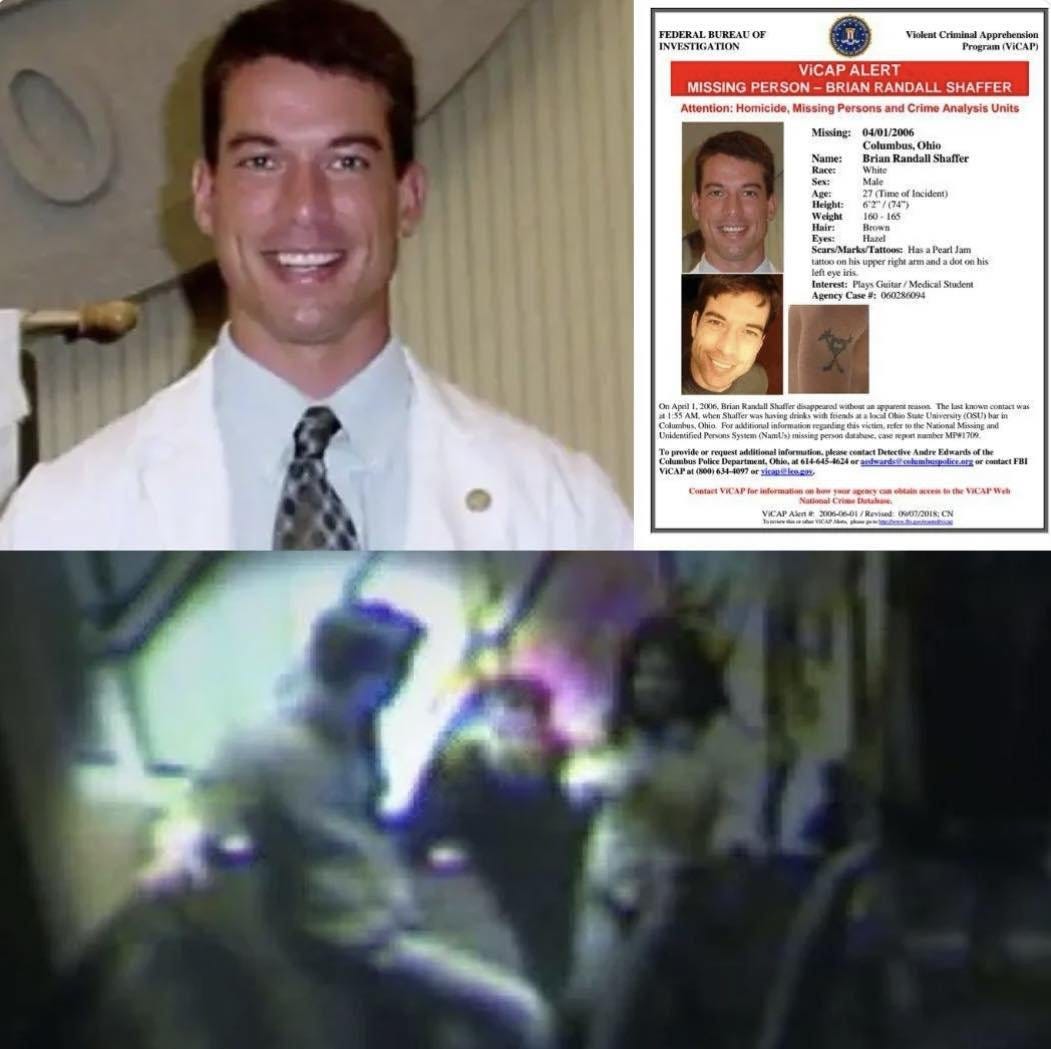
Since the cat’s out of the bag, I suppose there’s no point in saving this one for later. Not only that, my other drafts are well away from completion, so in the interest of also not having too much dead air, I’ll go ahead and publish this one, since I already kind of did (one of you even tried “liking” it!), and it’s the only complete draft I have at the moment. My original intent was to publish this essay to coincide with the 20th anniversary of the incident, but again, the element of surprise has been lost, so I might as well follow through.
I also want to address the fact that I seem to have lost several subscribers following yesterday’s error. Look, I’m not a pro. I’m a regular Joe who works a day-job and writes a blog on the side. It’s no excuse, but I also didn’t think something like that would turn readers off, especially given my body of work. It’s not up to me to decide, but if people do unsubscribe, I’d rather it be because they didn’t like the quality of my work or the subject matter of my writing, not because I accidentally published an essay.
That said, I appreciate those of you who chose to stay on, and I resolve to not do stupid stuff like that anymore. Moving on…
Let’s talk about something else today, something with strong implications for prepping. Like most preppers, I’m a true crime buff. Cold and missing persons cases intrigue me as much as the next person, due to their inherent mystery, as well as the lessons they offer in terms of preparedness.
One case which seized my attention is the disappearance of Brian Shaffer. A 27-year-old medical student at the time, Shaffer was last seen at a bar in Columbus, Ohio, on April 1, 2006, 20 years ago today. Since then, not only has he not been heard from, there has been nothing, not even a shred of evidence, regarding his welfare or whereabouts. All missing persons cases are mysteries, but Shaffer’s disappearance is arguably the most baffling of them all.
I’ve spent hours reading and watching videos on this case. The YouTube channel “VULDAR” has an excellent, extensive summary of the case. You’re not going to get a better briefing on the story than this:
One of the things I love about YouTube is how it provides a platform for independent sleuths. Some of their analysis is far superior to what you find in mainstream outlets. They’re often more extensive, and cover all bits and pieces of information, however irrelevant it may seem on the surface, to avoid conveying specific narratives.
It’d take me a whole essay - probably a series of essays - to do a deep-dive of my own into this case. Not only do I not have space for that here, but that’s not the point of this post, either. Many others have already turned this case inside out, so I’ll refer you to them instead. Still, I want to share a few thoughts of mine on this case.
Without A Trace, Literally
First, the reason why Brian Shaffer’s disappearance is so compelling is because nobody has any clue where to begin the investigation. After being caught on security camera outside a bar, Shaffer steps out of view, and not only is he never caught on camera again, no human reports seeing him again, either. If that was his last witnessed moment, then it was in full view of a large number of people in a public area. Yet not one person knows what he did, or where he went? All we have are theories.
Had a camera or witnesses seen Shaffer exit the building the bar was located in and walk this or that direction down the street, there would be a way to expand the investigation. Based on the available evidence, however, the investigation effectively ends where it begins. This is incredibly frustrating. Unless someone really believes Shaffer has been hidden inside the building he was last seen for the last 20 years, it’s not hyperbolic to say, figuratively, that he vanished into thin air.
Aside from “pings” from his cellular phone, next to no evidence of Shaffer has turned up in two decades. In most missing persons cases, there’s usually some evidence of what might’ve happened to the person or where they might’ve gone. Bloody clothing, disposed belongings, something. All possible sightings of Shaffer have been confirmed to not be him.
Presumption Of Innocence Still Matters
Much scrutiny has been focused on William “Clint” Florence, a close friend of Shaffer and one of the last people to see him prior to his disappearance. They had been spending the night out together, and had even once upon a time been roommates, though Shaffer eventually moved out for reasons unknown. By all accounts, they had a good relationship, though there are reports the two may have been arguing the night Shaffer disappeared. It’s not known what this argument could be about.
Florence’s significance to the story is that, among all those involved in the case who were asked to take a polygraph, he was the only refusal. He also lawyered up rather quickly, and after initially being cooperative with police, he not only eventually stopped, he also cut off all contact with Shaffer’s family. As you might imagine, Florence is eyed with suspicion by many.
Though understandable, there’s no evidence Florence had anything to do with Shaffer’s disappearance. For one, there’s nothing suspicious about refusing a polygraph. In fact, it’s probably the smart move, guilty or innocent. The polygraph isn’t a lie detector. It’s more like a measurement tool for assessing how confident investigators ought to be in what someone’s saying. The polygraph is rooted in the scientifically-backed fact that lying triggers the body’s fight-flight response. This physiological response stems from the fear of being caught in a lie.
The problem, of course, is that a person must be conscious of the lie and also be afraid of being found out. Without getting into a philosophical debate over what a truth or a lie is, if someone believes they’re telling the truth or they don’t care about getting caught, what’s the likelihood that their body will react as programmed by evolution? Not to mention, lying and fearing getting caught lying isn’t the only reason a person’s fight-flight response would be triggered during a polygraph. Maybe a particular question simply makes a person uncomfortable.
The other purpose of a polygraph is to serve as a means of helping police determine which direction to steer their investigation, a filtering mechanism. The logic is that those who do a polygraph and pass can be ruled out, for the moment, anyway, and anyone who refuses or fails ought to be more closely examined. The thinking makes sense. This strategy can be useful in a situation where leads and suspects are few, and investigators have no clue where to look, perfect for a case such as Brian Shaffer’s disappearance.
From an individual’s perspective, however, this can also prove problematic. Since polygraphs aren’t lie detectors, and thus are inadmissible in court in almost every state in the U.S., there isn’t much upside to taking one. As one YouTuber perfectly put it, if they refuse the polygraph, they’re eyed with suspicion. If they take the polygraph and happen to fail, they become suspects. If they pass the polygraph, but end up as suspects anyway, they cannot use the polygraph results as evidence of innocence, since the test cannot detect truth nor lies, anyway, and the results are inadmissible in court.
There’s a lesson here in the Shaffer case, therefore, on how one ought to conduct oneself in a case such as this: if you feel authorities are eyeing you with suspicion, even as a hunch, consider lawyering up. This isn’t an act of guilt. The fact is, the legal system is beyond the expertise of most Americans to handle. That’s why lawyers exist. Remember that police rarely ask you an insignificant question; even seemingly mundane questions should be filtered through the brain of an attorney.
This doesn’t mean lawyer up the moment your friend goes missing. It does mean you should consider hiring one if you notice police keep coming back to you, asking you the same questions over and over, and start making unusual requests such as searching your residence. You should also consider lawyering up over something as simple as a detective behaving rudely or unprofessionally towards you. Don’t ever square off with a cop. Get a lawyer instead. They’re the only person in this world capable of facing down a law enforcement officer and coming out on top.
I generally support the police. But the police aren’t perfect, are under tremendous pressure both within the agency and outside the agency to produce results, and are staffed with humans who often act emotionally rather than logically, like the rest of us. Absolutely cooperate, be honest, and make it clear you’re there to help any way you can. But draw the line at unnecessary encroachments on your privacy, persistent attempts to poke holes into your story, and address only what’s asked or relevant to the topic at hand. Don’t become involved unless you need to. It’s not about impeding their investigation. It’s about preserving the presumption of your innocence.
Still, Florence’s unwillingness to further cooperate with the investigation can’t help but raise suspicion. Remember, whatever issues may have existed between the two, they were still close friends, and Florence was one of the last people to see Shaffer before he disappeared. For someone like this to quit cooperating (“participating” may be a more accurate term) is strange; you’d think he’d be as determined as anyone else to learn what happened.
By the same token, again, if he felt he was being unduly scrutinized, I’m not sure I’d want to continue cooperating, either. You get tired of telling the same story over and over again. If detectives are discourteous and rude to you, I’d prefer telling them to piss off. Florence is likely following his lawyer’s guidance, which is always the right thing to do.
There exists rumor and innuendo that Florence was engaged in illicit activity, possibly involving drugs, in turn hinting at a possible reason for the suggested rift between him and Shaffer. But not only has this never been confirmed, even if it were, it doesn’t mean it has any connection to Shaffer’s disappearance. Either way, it just gives another reason as to why Florence might not want to cooperate with police any further. You don’t have to like it, but it’s his right as an American. It’s up to authorities to prove he’s guilty or that he’s at least involved.
Florence has never been implicated as a suspect nor even as a person of interest in this case. Still, one can’t help but wonder if he knows more than he’s let on. It’s again possible that if he’s trying to hide something, it has nothing to do with the case. It’s also possible he has no clue what happened to Shaffer. But his apparent lack of outward concern does make one wonder. It would be nice if Florence would, at some point, tell more of his side of the story. I can also understand how it could open a can of worms.
Possible Fate(s) of Brian
As far as where Shaffer could’ve ultimately ended up, YouTuber “143 Mysteries” found an interesting pattern in the evidence centering on the Columbus suburb city of Hilliard. It centers on the last “pings” of his cellular phone before it was never heard from again. Given that this was 20 years ago, cellular technology wasn’t as sophisticated as it is today. Even then, this still suggests that whatever happened to Shaffer, it definitely happened not too far from where he was last seen. It’s something worth looking into, given the dearth of leads. In a cold case, patterns are critical, and Hilliard is the only real pattern that’s emerged in the last 20 years. The only question is, are the police willing to expend time and resources pursuing this lead? This might be something only an independent or private investigator has the wherewithal to go after.
On that note, it’s interesting how people still go missing even in an age of advanced technology that makes tracking people on a real-time, persistent basis, possible. Fears of totalitarianism aside, it’s still possible to disappear without a trace. There are numerous other cases of people disappearing more recently, despite smartphones and the ubiquity of CCTV. If totalitarianism is scary, so is the idea that people can still disappear even when we’re effectively under constant surveillance.
If someone can still disappear in a surveillance society, it’s even easier in a less-surveilled one. The lesson is to not rely on technology or even other people for your safety. It’s still and always will be one’s own responsibility. Yes, we ought to do things to make things safe for us all. But we also need privacy, even when out in public. If we insist on our privacy, then we need to be responsible for our safety. It doesn’t work, otherwise.
Coming back to Brian Shaffer, will we ever learn what happened? It’s going to occur only one of two ways: either he turns up - dead or alive - or someone comes forward with more information. It’s worth noting, tragically, that only one member of Shaffer’s immediate family remains alive: his brother Derek. As long as he’s living, you can rest assured the case will always remain open, if not active.
What do I think happened? I don’t know. Going strictly by the lack of evidence, it’s 50-50 that Shaffer is still alive. I’ll say the following: it’s far from impossible that he left the building that night undetected. It’s far from impossible he was the victim of a crime, as he was in an area known to be dangerous at night. I’ll say, as a practical matter, that it’s less likely Shaffer is alive regardless of the statistical probability he is based on the evidence. The lack of sightings, the lack of any signs of life, the lack of any indication that he intentionally disappeared himself, it doesn’t necessarily point to foul play, but it points to Shaffer no longer being present in live form in the U.S.
And no, disappearing to a foreign country isn’t easy to accomplish, either. Just look at all the illegal immigrants and so-called refugees entering our own country - how many of them do you see coming empty-handed? Better yet, how many of them manage to slip by undetected? Many do, but many don’t. Many are caught on camera. Remember that Columbus, Ohio, is over 400 miles away from the nearest coastline, over 100 miles from the U.S.-Canada border, and over 1,000 miles from the U.S.-Mexico. If anyone believes he left the country, how’d he travel such vast distances without being witnessed by anyone?
As I said at the outset, all we have are theories. I suppose, in the absence of evidence, all are valid, but some are clearly more valid than others. The more you start breaking down theories such as running away, the less sense they make. For example, someone might argue that Brian didn’t take anything with him because he had everything he needed stashed away at some bug-out location. Well, where’s this bug-out spot, then? This is the difference between what’s plausible and what’s probable. You can come up with any number of theories that are at least hypothetically possible, but this isn’t the same as it being a likely possibility. Saying Brian had a bug-out spot without having any evidence for it doesn’t mean anything. It just means you have an imagination, like the rest of us.
There’s no way to debate what happened to him without mentioning the loss of his mother to cancer only three weeks before his disappearance. Obviously, deaths of loved ones hit us hard. In such a state of emotional vulnerability, people can do inexplicable things, like run away. However, we’re talking about three weeks here: if Shaffer had indeed run away, the decision to do so was either made during that three-week span, or long before.
It’s not likely that he came up with a plan to run away in three weeks. First, Brian was a 27-year-old. He wasn’t some immature child who doesn’t know how to handle hardship to where running away seems like a good idea. Second, anyone who’s lost a loved one knows how hectic times become following the death of a loved one. Obviously, the family had made preparations for the day, but executing those plans is a different matter. Combined with medical school, Brian was likely very busy during this three-week period. Where did he find the time to plan an escape?
Briefly exploring the idea that he planned to run away well ahead of time, I suppose one could say that he might’ve made up his mind to do so in the event of his mother’s passing. Brian’s relationship with his family was, like all families, happy on the surface, but complicated below it. It’s no different from the relationship we have with our own families. Yet, we don’t run off. Why would Brian be any different? He had so many blessings in his life despite tragedy.
The only reason he might’ve run off is due to a devastating emotional breakdown, but then that would mean his escape was an impulsive, spur-of-the-moment decision, not a premeditated one. Often times, these impulsive decisions are just as quickly reversed, unless something happened to Brian upon him doing so. Again, the deeper you dive into these more outlandish theories, the less sense they make.
I’ve gone into this case in more detail than I’d anticipated, so I’ll just close this bit by pointing to how this proves why the Brian Shaffer case is so compelling: because we don’t know what happened. More important, it’s a reminder of how vulnerable we and our loved ones are, and how among the most terrifying things that can happen to a person is to lose someone they care about and not even know why.
So, what are we as preppers to do with this story? How do we ensure neither we nor our loved ones ever vanish without a trace? Let’s discuss practical ways of preventing such an unfortunate fate in our own lives.
It’s Not Magic
First, how big of a problem is disappearance in the U.S.? According to the website Legal Clarity:
Each year, hundreds of thousands of individuals are reported missing in the United States. According to the National Missing and Unidentified Persons System (NamUs), a database funded by the U.S. Department of Justice, over 600,000 people are reported missing annually. In 2023, the National Crime Information Center (NCIC) recorded 563,389 missing person entries.
Here’s some good news:
The majority of these reported cases are resolved relatively quickly. For instance, in 2021, out of 521,705 reported missing person cases, more than 485,000 were resolved within the same year. Despite the high resolution rate, a considerable number of cases remain open, contributing to the ongoing count of missing individuals.
Not only is disappearance a statistically unlikely fate for most of us, even when we do, we’re often found, dead or alive, in the same year. Obviously, that’s morbid of me to say, but the point here’s that our loved ones will at least know what became of you, even if you do disappear.
Wagering your life’s fortunes on statistical probabilities is an easy way to lose in life. Still, it’s important to know how prevalent the disappearance phenomenon is to establish perspective. It’s not something worth losing sleep over, no, but it’s also something worth preparing for, given the high-consequence nature of the risk. So, what are some ways of preparing?
Keep your loved ones in the loop on your activities and whereabouts. Don’t overthink this one. We spend most of our days alone and nothing bad happens to us. However, there are certain situations where keeping family in the dark or being alone is imprudent. While traveling is an example, even domestically, even when going about your day-to-day activities, it’s better for people to have a general idea what you’re up to than no idea at all.
We all know that person in our lives who resists any and all attempts to get them to be more upfront about their activities. It’s difficult trying to convince them that you’re not trying to meddle in their affairs, that you’re just being there for them. Many of these people have an inflated sense of their own abilities and are in denial about their vulnerability. The best you can do is to casually ask them what they’re up to, ask them to provide emergency contacts, but the harder you try, the more they resist. Just put forth your best, good-faith effort, then let it be. We’re all responsible for our own safety in the end, anyway.
But don’t be that person, if you are. Look at it this way: when you end up in an emergency, isn’t one of your first instincts to get in touch with your loved ones, the ones you wished would leave you alone? When lost or in serious trouble, isn’t your first wish that someone knew where you were, and would stop at nothing to come to your aid?
Stick together. One the things that troubles me about Brian Shaffer’s disappearance is that he became separated from his group, either by his own doing or not. Once you become separated, bad things can happen. If you go out with friends, stick with them. I understand Shaffer and his friend Clint Florence may have had an argument. But this is no reason to run off on your own. If you decide to turn in, at least tell them, if angrily so, that you’re leaving. Don’t just disappear.
As someone who’s effectively a cat, in the sense that I lead a solitary existence, doing things with others isn’t a luxury available to me. Though I always find a way to have a good time, even when going out by myself, I still do wish I had others to share good times with. One reason is safety. There’s simply no substitute for having another person with you, looking out for you, and you looking out for them. I wonder how many people have gone missing or died because they had nobody looking out for them. The list is clearly too long, however long it might be.
If you do go out with others, adopt the “buddy system.” Basically, what one person does, that other person does. If you do end up separated from a larger group, make damn sure the two of you at least stick together. Obviously, you can’t spend all your time with one person, but don’t overthink this one, either. Just have one person watching out for you and you watching out for them.
If someone tries to take you, fight for your life. I hesitate to mention this since we don’t know if this even might’ve happened to Brian. Many people go missing due to kidnapping, and human trafficking is an unfortunate reality of life, even in America, however, so it’s worth it to briefly touch on it here.
Simply put, if you become the target of a kidnapping attempt, you have only two options: either fully resist, or fully comply. There’s no in-between. I rarely tell people to fight due to the legal and practical considerations of doing so, but I’m going to tell you here to fight like it’s the last thing you’ll ever do if you or your loved one becomes the target of a kidnapping attempt. You’ll never, ever, be more justified in the use of force, including deadly force, than during a kidnapping attempt.
You can’t kill someone intentionally, ever, even during a kidnapping attempt. But if a kidnapper gets killed in the process of defending yourself or others, then that’s the sacrifice necessary to save lives. Kidnapping isn’t a human right. Not even the most radical, far-left Democrat prosecutor would dare charge someone who survives a kidnapping attempt by killing their would-be captor.
A word of caution: always exercise due diligence and regard when coming to the aid of someone who appears to be getting kidnapped. Liberals have been irresponsibly characterizing the ICE operations as “kidnappings.” Whether it’s an arrest or kidnapping, if you intervene, you’re putting yourself at risk. If you intervene in law enforcement activity, the risk is either arrest or death. If you intervene in an actual kidnapping, the risk is either serious injury or death. Point being, always understand what’s happening first before you take action. Maybe a perceived kidnapping is a parent trying to corral a runaway. If you intervene and end up injuring or killing that parent, guess what? You’re the criminal now.
Obviously, time is of the essence in such situations. But the only thing worse than not coming to the aid of someone in need is to put yourself in a situation you had no business being involved in the first place.
Don’t go off the beaten path. We spend most of our lives in routine, but it’d be boring if that’s all we did. Hence, we travel, do different things, as we should. That said, don’t throw caution to the wind, either. If you travel, specifically to a foreign country, you’ve already taken a big calculated risk, so your level of complacency should be zero.
I’ve written about this in greater detail before. I’ll just add here that if the locals themselves tell you not to go somewhere, not to do something, don’t do it. They know their own country better than you. Many Westerners will travel to dangerous countries as if to prove something to everyone, yet the people who live in those countries are often the first to say that it’s not safe there. If you won’t listen to your fellow countrymen, at least listen to them, instead. If Brian Shaffer can go missing in his own country, his own state, his own city, why would it be any less likely somewhere else in the world?
On that note, don’t be complacent at home, either. America isn’t a country that varies too much on a geographic basis. In fact, America is painfully familiar everywhere you go these days. That said, when you’re a stranger somewhere, you’re a stranger. Your sense of direction, where everything is, it’s not the same. Familiarity can breed complacency, so don’t pretend like you can find your way around just because it all looks alike. It’s not like we spend our lives moving in straight lines from point A to point B all the time, anyway.
Resist complacency. I’m repeating this point because all preparedness comes back to this fundamental practice. 99% of personal safety is about awareness and just not being there when trouble strikes. Some people really struggle with never telling themselves, “It couldn’t happen to me.” To deny that isn’t to say “It would happen to me.” It’s to say, “It could happen to me.” There’s a big difference. If you acknowledge something can happen to you, you’ll take conscious steps to avoid it from happening to you or at least manage the risk.
Acknowledging your limitations and vulnerabilities is difficult for many people. But too bad. Get over your pride. Nobody cares except you.
Nothing good happens past 10 PM. This is a belief I hold with near-religious certainty. You don’t have to be afraid of the dark. But the darkness does bring with it risks that aren’t quite there in the lightness. It’s not always other people, either. Humans haven’t evolved to be nocturnal, so we’re biologically vulnerable at night. Avoid staying out late at night. The older you get, the harder it’ll become, anyway. It’s also always better to leave a party early than it’s to leave it when it ends.
If you do plan on staying out later than advisable, never do so alone. Always do so with at least one other person. As I said earlier, adopt the buddy system: if one person leaves, so does the other. Act as though your fates are intertwined. You go, I go, as it were.
Bottom line: it’s actually incredibly difficult for a person to disappear, even as Brian Shaffer did. Don’t make it easier to happen. Even if something bad does happen to you, make sure it happens in front of other people, so there’s no mystery to solve.
Be There For One Another
In closing, I want to share a story from my youth. When I was a teenager, my mother ran a business. Late one night, she came into my room to tell me she was heading back to the store, because she didn’t think she’d locked up at the end of the day. The store was several miles away, amounting to a 15-to-20-minute drive one way without traffic. Like most kids, my initial instinct was to want to go back to bed.
However, in an instant, I told my mom that I’d go with her. I didn’t like the idea of her heading out on the road late at night and was understandably worried about her safety. Nothing specific, it’s always a little concerning when a loved one has to go out late at night for any reason. We quickly got dressed, hopped in the car, and drove to the store. I didn’t think much of it at the time, but thinking back on that moment decades later, I’m immeasurably glad I chose to head out with her that night.
Not because something bad happened, either. Yes, my mom was correct: she’d left the store unlocked, so it was a good idea we went and checked. And again, nothing bad happened. After we locked up, we headed back home, went to bed, and nothing more came of it. The reason why I’m glad I did what I did was because, well, I did the prudent thing, and I didn’t let my mother head out into the darkness alone. Would anything bad have happened had I not gone? Hopefully not. But I like to think that nothing did because I was there. I doubt my frail, skinny self at the time would’ve deterred any bad guys, and I don’t remember seeing anyone else that late at night at the strip mall her store was located.
Still, God forbid something happened to her that night, I shudder to think how devastating that would’ve been, how much guilt and regret I would’ve had to live with in the aftermath. Not to mention the immense worry I would’ve been subjected to, and worry is something that took me my whole lifetime to manage effectively. It seems irrational to get wrapped over something that didn’t happen, but I also think you can’t take solace only in the fact something bad didn’t happen, either. You need to be able to take solace in the choices you made as well, because our choices are the only thing we have control over. By going out with my mom that night, I was at least there for her. Most of the time, that’s all that’s needed, to just be there.
The reality is, humans, on their own, are incredibly vulnerable. As I said before, this fact seems to wound the pride of many. But the only reason anyone really makes it on their own is because civilization makes possible many things which are impossible in nature, which is ruthlessly Darwinistic. Like it or not, we need others, even strangers, to survive in this world. It’s a big ask to be there for those you don’t know, but at least be there for those you do.
Brian Shaffer was loved and cared for by many. It wasn’t enough to save him. Still, he’d have been far worse for the wear if he had nobody who cared about him. There’s a unfortunately common strain of thinking, among liberal-minded folks, I must say, who claim that the only things in life that matter are what we choose, and what we never chose, be it our family, the country we were born in, means absolutely nothing.
I hate this thinking. I want to hate people who think like that. Because not only are they dead wrong, imagine how cynical and demoralized a person must have become, despite all outward appearances, to honestly believe that. How much of our lives are truly entirely a matter of personal choice? I’m a big believer in the saying better to be lucky than good. Yes, we need good fortune in our lives at one time or another. Even the choices we made worked out because someone else said, “Yes”. Sometimes, we made it out of a bad situation because someone else said, “No”. We didn’t choose that.
I’m on the verge of rambling, so I’ll just add that the people who think only what they get to choose matters will often choose badly. Shows you how much stock we should place in their thinking, doesn’t it?
None of us make it through life on our own. No matter what we believe, let’s all resolve to be there for the people we care for. It’s the best we can do, at the end of the day.
It’s time to discuss. Are you familiar with the Brian Shaffer case? What do you think happened to him? Do you think we’ll ever find out? What other cold or missing persons cases intrigue you? What are your suggestions for avoiding the disappearance act? Please share your thoughts and stories in the comments below.
Max Remington writes about armed conflict and prepping. Follow him on Twitter at @AgentMax90.
If you liked this post from We're Not At the End, But You Can See It From Here, why not share? If you’re a first-time visitor, please consider subscribing!
Thought provoking ramble. And if what a reader takes away is a commitment to the buddy system, your work validated. Individuals are usually vulnerable. There is strength in numbers, starting with two.
But I DID like it! I don't need perfection, you were stimulating my thoughts, that's enough. I think the worst "pandemic" of our times is the plague of "self importance". Funny story, I had read something a combat veteran wrote about the first time he was in combat, and how "offended" he felt that someone wanted to kill him, the most important person in the world. That's exactly what my reaction was the first time someone expressed a sincere desire to kill me. It wasn't funny at the time, but looking back on it, it's hilarious, it's like the "I did the meme" thing! 😏🤣
I'm old. I've been in literally life-or-death situations in the wilderness where all the shouting for help i could manage would be utterly meaningless. I figured out Life and God don't even owe me the proverbial "shallow grave"; anything I get from others, that's a blessing. I think you're doing great, and I thank you for your time and thoughts! Okay?