A Nation of Emigrants
We only have so many years in this world, so why spend it someplace you don’t like, you feel unsafe, or otherwise feel miserable?
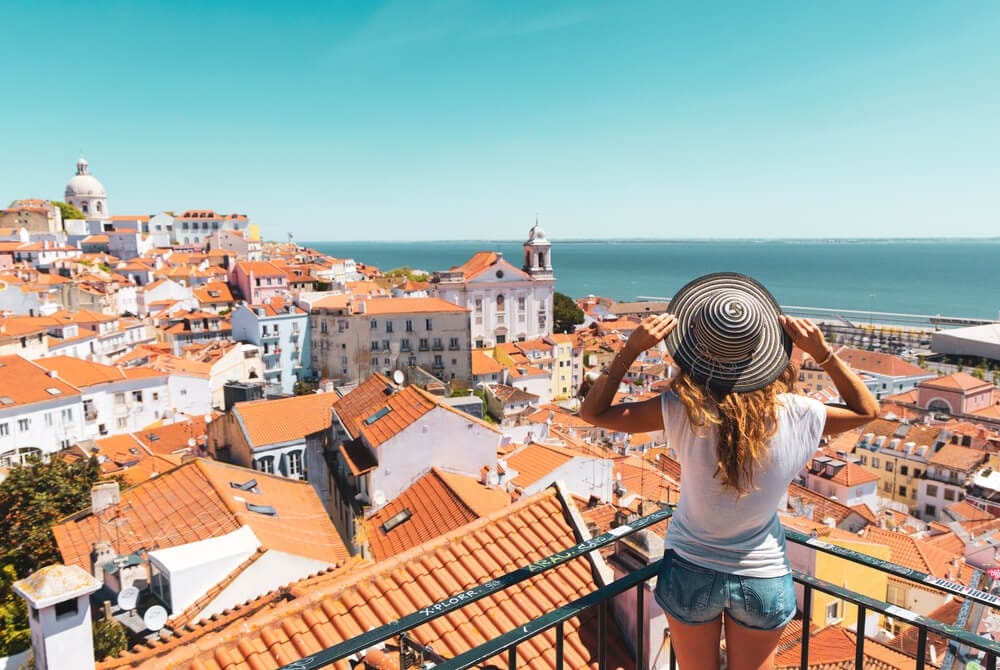
The Wall Street Journal reports that an increasing number of Americans are leaving what was once the New World, heading back to the Old World and elsewhere in search of greener pastures:
In its 250th year, is America, land of immigration, becoming a country of emigration?
Last year the U.S. experienced something that hasn’t definitively occurred since the Great Depression: More people moved out than moved in. The Trump administration has hailed the exodus—negative net migration—as the fulfillment of its promise to ramp up deportations and restrict new visas. Beneath the stormy optics of that immigration crackdown, however, lies a less-noticed reversal: America’s own citizens are leaving in record numbers, replanting themselves and their families in lands they find more affordable and safe.
Where are the emigrants moving to? Not surprisingly, they tend to be nice countries, along with places that don’t have reputations of being a “nation of immigrants,” ironically:
In the cobblestoned streets of Lisbon, so many Americans are snapping up apartments that the newest arrivals complain they mostly hear their own language—not Portuguese. One of every 15 residents in Dublin’s trendy Grand Canal Dock district was born in the U.S., according to realtors, higher than the percentage of Americans born in Ireland during the 19th-century influx following the Potato Famine. In Bali, Colombia and Thailand, the strains of housing American remote workers paid in dollars have inspired locals to mount protests against a wave of gentrification.
Lisbon has become an “it” city as of late, and Portugal an “it” country. This is due to affordability, pleasant climate, nice people, culture, beauty, and special work visas making it possible for professional-types to move and live with relative ease. Spain is another popular destination for similar reasons. So are more further-removed countries like Bali and Thailand. Even countries like Albania are becoming hot destinations for expats.
Some Americans simply move across the border or opt to remain in the same geographical neighborhood:
Meanwhile, some 50,000 U.S.-born Mexican-Americans moved across the border to work last year, according to a Mexican government survey cited by the U.S. Census Bureau.
This is a somewhat separate discussion, but there’s something ironic about citing instability or safety as a reason for leaving the U.S., then picking Mexico. In fact, while the rest of the world doesn’t have to worry about the same risks as Americans, many are becoming increasingly dangerous due to their own internal political climate and immigration, especially in Europe.
The article contains charts which show the extent to which Americans are leaving. Ireland, for example, saw the number of new arrivals from the U.S. double from 2024 to 2025, something of a reversal of trend that has lasted well over a century. Other countries which were a source of immigration to the U.S. since the beginning, like Britain and Germany, are also seeing more Americans arriving than Britons and Germans leaving for America.
Some commentators have labeled this wave of American emigrants the “Donald Dash” since numbers have spiked under President Trump’s second term. But the phenomenon has been building for years—fueled by the rise of remote work, mounting living costs, and an appetite for foreign lifestyles that feel within reach, especially in Europe.
Money Matters
Is international relocation a viable option for most, however? The story says that it’s no longer just the affluent who are moving. It’s important to not take this too literally, however. If you want to move overseas, you need money. I’ve noted that migrants tend to either have money, even if they’re not wealthy, or they tend to be poor. There’s not a whole lot of in-between. Of course, poor migrants also cause the most problems; they’re more likely to immigrate illegally, claim refugee status, and depend on the generosity of their new country to get by.
From the story:
Relocation agencies say their new clients go far beyond young adventurers on European sojourns or their retiring parents. They include Midwestern small-business owners—architects, financial advisers and engineers—saving on healthcare costs by living seven time zones east of their clients. Middle-aged divorcées are looking for a fresh start and Americans on disability or social security are trying to stretch their benefits.
…
The exodus poses elemental questions for a country that has always prided itself as a destination. Are the new American emigrants a credit to the strength of their homeland’s economy? After all, it is America’s enviable salaries that allow a new class of students, remote workers and retirees to finance a second chapter abroad, their wages and stock gains powered by the Silicon Valley juggernauts dominating the global economy.
This exposes a reality about this burgeoning expat trend which can’t be ignored: it’s possible for so many because they’re making American money. How big a difference does it make?
Consider Mexico City, popular among American digital nomads. According to the website Numbeo, cost of living in Mexico City is over 41 percent less than Los Angeles, with rent close to 50 percent cheaper. Assuming it takes $9,000 a month to live comfortably in Los Angeles, it requires almost $5,000 less to maintain the same lifestyle in Mexico City.
Here’s the problem - the average monthly net salary in Mexico City is little over $1,000. GDP aside, Mexico is still a poor country. Again, American expats and digital nomads probably aren’t poor to begin with. The point is that without American money, living in these cheaper countries would likely be untenable, because the whole reason why they’re cheap is because they’re poorer. Make no mistake about it: life may be sweet for an American expat earning U.S. dollars, but life’s still tough for those native to these countries.
In fact, there’s concern about backlash to both expats and tourists, who play a role in driving costs up to where locals have a hard time affording to live, while foreigners can, a problem the WSJ article cites. In Mexico City last year, violent riots broke out over expats, Americans particularly, who not only drive the cost of living up, but don’t even pay taxes. In cities like Barcelona, residents make it clear to foreigners they’re no longer welcome. This, despite the fact tourism counts for a significant percentage of economic activity.
I came across an X post talking about someone who met a Fort Lauderdale, Florida woman who retired in Mérida, Mexico, buying a house for $150,000. I’m going to assume it’s a nice house, not to mention Mérida is one of the safest cities in the Western Hemisphere, suggesting quality of life is just as excellent. The problem, though, is that if foreigners keep moving to places like Mérida, it’ll remove housing off the market, along with making life unaffordable for those already living there. $150,000 will get you a blockhouse in America these days. In Mexico, however, most Mexicans cannot afford such a home.
It’s an open question when the backlash will spill over into something more serious. If last year’s events in Barcelona, Mexico City, and elsewhere are any indication, however, it only proves that the natives are getting restless, and an overall tumultuous future doesn’t bode well for those seeking to live out their dreams elsewhere. It’ll be interesting to see how they respond when suddenly they become the immigrants scorned by the natives. I’ve heard some say “It’s their country, it’s their right to decide who gets to stay,” not seeing the utter irony given their flippantly dismissive attitude towards America’s own right to do the same.
The whole expat phenomenon is thus defined by contradiction, like most things in life: they’re moving because life has become so expensive in America, yet these people are also fairly affluent, or at least not poor. And by moving to poorer countries, they’re actually upgrading their lifestyles. For all they talk about exploitation, colonization, and wealth gaps, liberals are at the forefront of it all.
Not only that, their dissatisfaction with the U.S. belies the fact it has become a country more to their liking over the long term, the Trump presidency aside. When it comes to politics, liberals might look back and realize they never had it better now than ever. That’s assuming they have any self-awareness or capacity for introspection, of course.
Land Of The Free, Home Of The Crazy
Certainly, it’s not all politics:
Or do these émigrés personify a loss of faith in America’s future and way of life? Across dozens of interviews, U.S. expats described their motivations as a tangle of economic incentives, lifestyle preferences and disenchantment with the trajectory of America, citing violent crime, cost of living and turbulent politics. Trump’s re-election was a factor for many—although others voted for him. But the structural and societal shift runs much deeper. When Gallup asked Americans during the 2008 recession how many wanted to leave the U.S., the answer was one in 10. Last year: One in five.
There exist many reasons driving Americans overseas. But there’s no question the increasing political instability in the U.S. is serving as an accelerant in the emigration trend. Late last year, I noted that young women increasingly want to leave America for good (worth noting that number is down from 2024, may go back up in 2026). Up until now, Americans who talked the talk about leaving rarely walked the walk. Now, that appears to be changing. I think it’s a good thing.
For one, it’s easier to talk about something than actually doing it. More action, less talk. Thus, it’ll save us the trouble of hearing the incessant whining that’s become so emblematic of America’s cosmopolitan, liberal, professional managerial class. Two, those leaving tend to be fair-weather Americans, at best. At worst, they’re absolutely not the kinds of people this country needs, absolutely not the kind of people you’d want as your fellow countrymen. If they’re not happy here, then they should leave. It’s nice to see they’re finally doing it and I hope more of them follow them in their path.
It’s not fair to make it entirely about politics, however:
Strikingly, the new American migrant is more likely than ever to bring children in tow, relocation companies and realtors say, laying down roots and raising a set of Americans feeding into foreign colleges.
“You don’t face the prospect of your 5-year-old going into a kindergarten and doing an active shooter drill,” said Chris Ford, 41, who works for a Dallas real-estate investment firm while helping run a kids’ baseball league in Berlin, whose roster has doubled in size for each of the past three years. “The wages are higher in the U.S. but the quality of life is higher in Europe.”
The mass shooter phenomenon is overblown and your kid is more likely to die at the hands of a bully than a mass shooter. Still, I can understand parents wanting to raise their kids in a less chaotic environment. It’s not a fact I shy away from: even in Europe, which is in the process of committing civilizational suicide, life is still much safer, more orderly than it is in America. Every time I return home, I’m struck by how much of a rat race life can be in the U.S., how many threats I need to be cognizant of as I go about my daily business.
Mental illness is also a major problem in America. This country has a surplus of crazy people and I’m not sure why. There’s something about American life that produces such a large number of wackos. They make normal life difficult, because you can never go about your business freely if you know you might run into someone you’re not going to be able to handle through normal means, but you can’t necessarily defend yourself from with force, either. That’s another thing that strikes me every time I travel overseas: no crazy people. I’m sure they have them, but they’re not as prevalent nor out in the open like in the U.S.
It’s not all about crime and physical violence. Our reliance on motor vehicles means we have to travel relatively long distances for the simplest of needs. In America, if you need to go to the pharmacy, you need to drive five to ten minutes one way, expending fuel in the process. That all adds up. In Europe? It’s a five to ten minute walk. Sure, it’s the same amount of time, but the point is you’re not getting there and back without a car. Drunk driving is also a virtual unknown in Europe, since there’s always a bar or restaurant in walking distance, or accessible via high-quality public transit.
“Love It Or Leave It” Is Actually A Thing Now
So while the rest of the world isn’t without it’s problems, while the grass is never greener on the other side, while everything comes with trade-offs, there are still many advantages to not living in America these days:
In return, Europe offers inexpensive healthcare, walkable cities dotted with sidewalk bistros and co-working spaces where English has displaced the local tongue. Housing in many cities remains comparatively cheap and plentiful. Schools are affordable, safe and, excluding universities, generally higher-rated than America’s.
I don’t want to live in Europe, as I’m too attached to my country to move. Sometimes, however, I wish America was more like Europe. For those who aren’t quite as attached to home, or find supremely practical reasons for moving, I wish them nothing but the best, regardless of motivation. We only have so many years in this world, so why spend it someplace you don’t like, you feel unsafe, or otherwise feel miserable?
The remaining question is this: how enduring will this trend prove to be? The article notes that many Americans are renouncing their citizenship, either because dual citizenship isn’t allowed in their new country or so they’re not subject to U.S. taxes. This suggests the move is effectively permanent.
But again, understanding why people are even able to move overseas is an inseparable part of the story. As X mutual Annalisa Fernandez said in response to the story:
The number of Americans actually moving abroad is still small and was driven by remote work and a strong dollar. The much larger segment expressing interest in moving is largely driven by politics. That’s different.
Max’s take? Always pay attention to people’s actions more than their rhetoric. The number of Americans moving overseas might be higher than ever before, but they still comprise a negligible percentage of the population. The U.S. won’t be any worse for the wear because these people left. More importantly, most of those who say they want to move, won’t. I’ve mentioned this in the past, but I know many such people. They’re all still living in the U.S. I’ll honestly be surprised, albeit pleasantly so, if they did end up moving.
Moreover, many of these people will eventually return to the U.S. A video recently went viral on social media of an American woman of liberal persuasion who “escaped” the U.S. to Canada. Bearing in mind that Canada is the only country even remotely similar to the U.S., she now can’t stand living there. Personally, I couldn’t care less why - the point is that life is, once again, never greener on the other side. Another important lesson is that if you leave purely for political grandstanding, unless you’re truly committed to becoming a member of another society, even as a temporary immigrant, it’s going to be tough, and it’s tough enough being an immigrant. You’d think liberals, who literally worship immigration, would understand this, of all people!
Finally, America isn’t without it’s problems, and the situation here will deteriorate, unfortunately. You can count on it. However, the U.S. is also still a mostly island country, bordered by a friendly country to the north (despite Trump’s attempts to change that) and a frenemy to the south. In other words, our geographic security is unparalleled. We’re still the world’s most powerful country in nearly every respect, and will remain so for some time, even through the current Fourth Turning.
On a long enough timeline, everything terrible under the sun will eventually happen. But as our friend Kaiser Bauch likes to say, we’re not talking about what’s going to happen a century from now, a future none of us will be around for. We’re talking about what’s going to happen in the next five, at most ten, years. No matter how bad things get in America, I wouldn’t bank on things getting so bad that it triggers a mass exodus. The U.S. still possesses tremendous strengths, making it a safe haven second to none. When the world situation deteriorates - again, you can count on it - most, if not all, Americans will opt to return home.
And that’s the thing about home, isn’t it? You may not like it now, but when you need it, boy do you really. It’s easy to think the whole world is your home, and the world can be a wonderful place. I know. I’ve seen it. But humans need homes for a reason. They need a place they know, that knows them. They need a place they unquestionably belong to, a place unquestionably theirs. All this is under assault through the West, the foundation of the crisis it faces. In that sense, one can only hope Americans understand a home is something to be protected, even jealously, because once you give it up, ask the new occupants nicely all you’d like. You won’t get it back.
Still, if anyone does head for the exits, don’t try to stop them. They may not necessarily be making a bad choice. As prepper Fernando “Ferfal” Aguirre explained in his excellent book The Modern Survival Manual: Surviving The Economic Collapse:
If crime is out of control, if there’s a real risk of anarchy, it’s smarter to just leave the country. Throughout history, people have moved around, and emigrated from one country to another for a number of reasons. War famine, natural or man made disasters and political or religious persecution.
…
Emigration is the last resort you end up using, when you see that things won’t be getting better in your country for a long time.
Fernando Aguirre is obviously describing a scenario far worse than I envision. His lesson is simply that if you’re not confident about your country’s future, if that bleak future you see in your mind isn’t something you want to wait around to find out about and subject your spouse and kids to, leaving earlier might be better than leaving later.
Immigration is arguably the hottest political issue in the West currently. While open borders is never a solution, we shouldn’t see immigration or emigration as a bad thing, either. Sometimes, it just needs to happen.
What about you? Have you ever thought about leaving the country and living overseas, even temporarily? Where would you go? Or have you lived overseas already? What advice do you have for those looking to move? Let’s discuss it in the comments.
Max Remington writes about armed conflict and prepping. Follow him on Twitter at @AgentMax90.
If you liked this post from We're Not At the End, But You Can See It From Here, why not share? If you’re a first-time visitor, please consider subscribing!
I do wish suburban America was more walkable. If they could change zoning in residential neighborhoods to include a small Main Street carve out that sits inside or adjacent to a community, then that could replicate something of a walkable neighborhood. That’s just one of the urban design solutions that I think future generations will want for quality of life issues. I agree, why drive when you just need one onion or a can of soup?
But, I’ve thought of having a backup country. Then I realized that as hectic as things may be in the US, the more rural suburbs are just a-okay. So that’s what we did. Even Merida, nice as it is, is still in Mexico. And being an expat will always stick with you, no matter how friendly the locals are.
On the issue of "fair weather Americans", Renee Good and her lover apparently moved to Canada for a while, since Trump was going to imprison all gay people or something. Why they came back I'm not sure, but I'm guessing they discovered living and working in another country is pretty hard. I worked in Holland for a couple of years; ex-pat life is harder than most realize, even temporarily.
As for the proliferation of crazy in America. Robert Kennedy wants it to be about vaccines and processed food; I have my doubts. I wonder if it's more basic: lack of guardrails. America has always been a less guardrailed society than Europe or Asia (esp the latter.) We pride ourselves on our Horatio Alger myth. John Stuart Mill lives larger here than in his native Britain. A wide open society works for about 30% of the population; another 50% can function with difficulty, but the rest really struggle. They need those social and legal guardrails to not drive their lives off a cliff. This depresses me, since it means our crazy is the flip side of the dynamism that characterizes America.