Keep Your Guards Up
As always, no matter who’s president, don’t let the numbers tell you what to think.
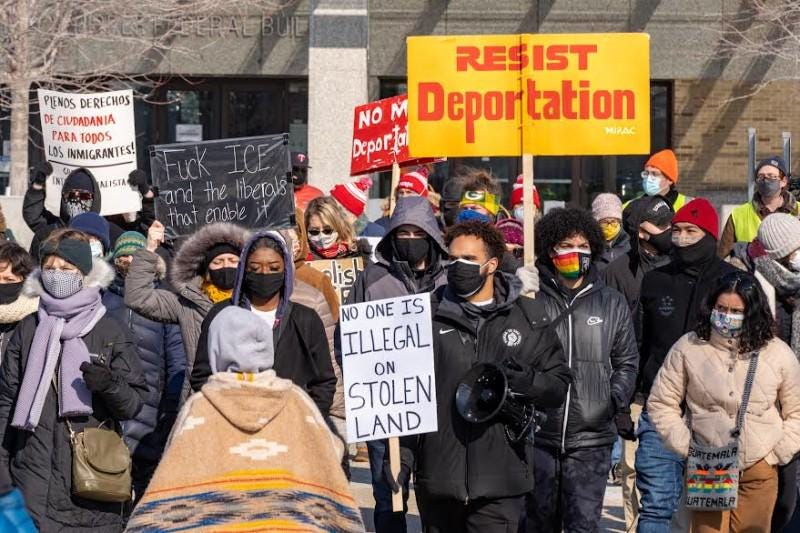
I’ve been speaking a lot on the topic of violence lately. It’s been a recurring theme in my writing since I started this blog. Today, I want to discuss violence from a practical perspective, rather than a social or political perspective as I’ve been doing as of late.
Despite Americans’ fantastical obsession with violence, talking seriously about violence is still something most are uncomfortable with. That’s because we like the idea of giving people the punishments they deserve, but we don’t like the idea we ourselves might ever be victims of violence. The fact is, dealing with violence is going to become a skill we all need, because violence will become more prevalent in our lives as the political situation continues to deteriorate in the United States.
I have a lot of new subscribers, so I want to take a second and let all the newcomers know that prepping-related pieces are what I enjoy writing most. It’s one thing to point out all the world’s problems. It’s another to offer solutions. I have no political solutions to offer, but I have practical solutions to offer which everyone can apply o their daily lives.
Unfortunately, these are also not the most popular of my essays, and certainly not the reason why readers subscribe to this blog. That said, I hope you’ll appreciate this momentary diversion from my usual fare. Sometimes, you need a break from it all.
But Wait… Isn’t Crime Way Down?
At the State of the Union Address, President Donald Trump touted as one of his accomplishments the decline in crime nationwide. It was a fact that even CBS News had to acknowledge:

Media consensus is that crime is very much in decline. That’s not in dispute. What’s in dispute is the reason why. The Left, as you might imagine, pretends like it’s some big mystery. If they offer a reason, it’s because we’ve always been safe, except from assault rifles and angry White men, and high crime rates are the result of too much policing.
Drew Holden on his Substack Commonplace explains why crime isn’t anywhere near as complex as liberals maintain:
Crime—particularly violent crime—is down dramatically over the last year. Cities like New York, Memphis, and Washington, D.C. where murders, carjacking, and theft plagued the public in the wake of COVID-19, were all found to have experienced double-digit decreases in violent crime. Experts, the legacy media, and many Democrats are scratching their heads. As a recent New York Times headline declared, “What’s Behind the Staggering Drop in the Murder Rate? No One Knows for Sure.”
Other outlets and commentators have been similarly befuddled. New York Magazine dubbed it “The Mysterious Plunge in America’s Murder Rate.” Experts “said it’s too early to tell what is prompting the change,” the Associated Press intoned; the Washington Post cited a liberal expert who cautioned that there was “no silver bullet” to make sense of the data. For TIME, the drop in violent crime “can be attributed to a kaleidoscope of factors, none of which can singularly or definitively account for the decline.” CNN shrugged that “it’s nearly impossible to zero in on any one reason” for the drop. “The bottom line: Experts aren’t sure why violent crime continues to fall,” Axios reported.
Not until 21 paragraphs into the Times piece do the authors give us a hint about how it happened: experts “do not wholly discount” policing, particularly “the multipronged effort that many cities mounted against violence in the past few years, including hot-spot policing, summer jobs for youth, cognitive behavioral therapy and focused deterrence, an approach that calls for paying sustained attention to the small number of people at highest risk of committing violence.”
In other words, violent crime is in freefall across the country thanks in large part to better, more targeted policing aimed at restoring law and order. The biggest threat to our renewed ability to combat crime might be a legacy media hamstrung by the baggage of prior anti-police animus.
While stories about the decline have focused mostly on “expert” wisdom, a look at the cities hardest hit by crime reveals a pattern of more aggressive and law-and-order focused policing.
Read it all. Holden goes on to say partisan politics makes it difficult to talk about crime openly and honestly, even when the news is good. But this entry isn’t about politics or even policy. It’s about what we as everyday people, as preppers, are to do with this good news.
As always, contextualize the information first. Is America safer than it’s been? Yes. Is America safe by objective standards? Sure, the lifetime likelihood any of us will be victimized by crime while living in this country is low. Is America safe compared to other developed countries? This is where the numbers fail.
The world as a whole isn’t a safe place. Still, America is still one of the safer places to be. The risk of being shot or stabbed and robbed by a stranger is quite low and can be prevented with situational awareness and avoidance. Compared to much of the developed world, however, the U.S. lags. I’ve written about this plenty, so I won’t go into great detail on it here. But there are safety concerns Americans must be aware of that people in other developed countries don’t need to. The risk of mass shootings is overblown, but it’s still a risk that’s virtually non-existent in other countries. Road rage, though it exists throughout the world, is a big problem in the U.S., due to our automobile dependency. Then there’s the inconvenient problem of the black community, which is the driving force behind American crime rates.
It’s also a matter of the ambient environment. In the U.S., urban areas aren’t built for walking. In addition to the dangers posed by passing motor vehicles, the streets are occupied by a population of its own, many of whom are mentally ill, many of whom are dangerous. The risk of becoming victimized by random violence is low, but if one is to become a victim of random violence, it’s at the hands of one of these street-dwellers. This is a reason why so many Americans feel unsafe walking the streets, and foreigners from even less developed countries make note of the fact that the street-dweller problem simply isn’t something they have to deal with back home.
Put simply, America is as safe as it’s been by its own standards. It’s safer than most, yes. But we’re absolutely not Japan nor the Czech Republic. The lower crime rates should help put Americans at ease, but it’s absolutely not a call for everyone to throw caution to the wind, to let our guards down. Americans are as safe and peaceful as we’ve ever been, but danger still lurks all around us. It’ll be a long time before we’re sitting outside at cafes or women can walk around late at night without a care in the world. America’s declining crime rates is good news. But it’s not a reason for complacency.
Finally, there’s the matter of the real problem: disorder. Crime isn’t out of control. The problem is that American society, at all levels, sees crime as something normal, something to be tolerated, and a social failure for which enforcement is an injustice. Our society has decided crime is basically like the weather: there’s nothing to be done about it and we just have to learn to live with it. But given how ill-prepared we can be for the weather, how many of us are truly ready for violence?
As always, no matter who’s president, don’t let the numbers tell you what to think:
As for the highly contentious matter of crime statistics, I’ve said it once, I’ll say it again: they don’t matter. Now, let’s contextualize that. Of course they matter. But as far as your life goes? Not really. If you become a victim of crime, the fact that it happened to you is what’s most important, no matter what the numbers say. The severity of a crime doesn’t go down because the country is a less dangerous place than it was when the oldest Millennial was barely 10 years old.
Developing A Personal Use-Of-Force Policy
Everyone should have their own use-of-force policy for dealing with crime and violence should we ever encounter it. The challenge is that this policy, though tailored to meet our personal needs and individual capabilities and shortcomings, needs to be consistent with what the law permits us to do as private citizens. What considerations shall we keep in mind?
Daisy Luther at The Organic Prepper published an article recently explaining the importance of understanding how force is to be escalated, when force is to be escalated:
Obviously, there are life and death situations in which deadly force is the only possible response if you want to live. When someone bursts into your home waving a gun screaming that they’re going to kill you, when someone in a mask is trying to drag you into a van with dark-tinted windows, when someone is clearly intent on beating the crap out of you until you’re dead – all of these things are situations in which your use of a lethal response is entirely justified.
But… a lot of situations require more finesse unless you want to risk a) spending the rest of your life in prison and praying you don’t drop the soap or b) waiting for bloody vengeance from your adversary’s friends or family or c) criminal prosecution and civil lawsuits forever and ever until you die.
You need to have an understanding of the appropriate escalation of force.
Luther raises the point that the self-defense maximalists default to things like carrying firearms and using force at the first sight of danger when discussing personal safety. In reality, these people are setting others up for failure. Not only that, these are emotional takes, not reasoned ones. I get it - I hate bad guys getting their way, I hate social predators and protesters doing whatever they want while we all have to sit there and take it. But power ultimately dictates all societal dynamics and America is no different. If anything, our social order is built around giving one side total power and disenfranchising everyone else.
Consider protest. It has become very common during the last decade. Unfortunately, when they occur, the protesters effectively control the streets, acting as the Regime’s enforcers, even as they claim to be fighting “fascism” by opposing the Trump administration. In fact, they’re not all that different from Oliver Cromwell’s Puritans in England or Mao Zedong’s Red Guards in China. That’s why knowing how to deal with them ahead of time is so important. Anyone who tried to go take on the Puritans or Red Guards never won. You need to treat Free Palestine, anti-ICE, even LGBTQ+ and climate change protesters as though they were as dangerous as the Puritans or Red Guards because, well, they are.
But how do we do this? American society would like you to lower your defenses, just sit back, and take the abuse. Why so on edge, anyway? Deprogramming yourself of defensive instincts is a terrible strategy, of course. The goal instead is to become better at threat assessment.
Luther provides a list of questions to ask yourself if you ever feel your fight-flight-freeze instinct kicking in:
Are you just being yelled at or mocked?
Are people just trying to intimidate or embarrass you?
Are they trying to have an actual discussion or just shout over you?
Are you outnumbered?
Are they threatening to physically attack you?
Are they capable of physically attacking you?
Are they armed with firearms, items that could be used as bludgeons, or knives?
While all of these things may make you angry, if you are not in physical danger, you have to temper your response accordingly.
The reality is, unless they put their hands on you, force is probably an unjustifiable response. Practical considerations need to be taken into account as well. Only when a mob is attacking you might shooting your way out be a justified response. If you end up in a situation where you have to shoot your way out, however, you’ve also ended up in an extremely dangerous situation where your survival isn’t guaranteed. How’d that happen?
This is where simply not being where the danger is at is so important:
Presence: The encounter requires your presence and there are two components to this. First, is, don’t be there. Any time you ask Selco and Toby Cowern what you should do in a dangerous situation, their immediate response is “don’t be there.” And that is true of many of the things happening right now. Going to a protest, for example, is automatically putting you at high risk of being involved in a violent encounter.
I’ve explained how both Renee Good and Alex Pretti are responsible for their deaths simply for placing themselves in a potentially violent situation, as well as behaving in a way that could trigger violence. You can cite your rights all you’d like, but at the end of the day, it’s not up to you to decide what happens. Perhaps if they feel that strongly about an issue, there’s no stopping someone from going to a protest. For the rest of us, however, protests aren’t worth attending. Any time large numbers of angry, like-minded people gather together, there’s always potential for things to go wrong. There’s plenty of academic literature on the mob mentality and how it can turn anyone into a vicious aggressor.
If you encounter danger, remove yourself from the situation immediately:
Your second option is to leave the situation. If you find yourself in a scenario in which you could be embroiled in a violent encounter, leave. This is like “don’t be there” but in action form. If you see a crowd gathering up ahead chanting and raising their fists in the air, turn around and go a different way. If you are in a setting in which someone makes you feel uncomfortable, trust your instincts and leave. Don’t talk yourself out of listening to your gut. You’re not being silly. And who cares if you look impolite? (This is especially true for women.)
Again, nobody’s going to care about your rights, nobody’s going to care that you’re allowed to be there. When mobs form, their mentality is that they own that sidewalk, they own the streets. This is especially true of leftist mobs, since they regard protest as a right exclusive to them. Never, ever, confront a mob, never try to appeal to their humanity or morality. When part of a mob, you’re right, everyone outside the mob is wrong. When part of a mob, you can just steamroll anyone standing in your way.
On Luther’s last point, I’d caveat that by saying this isn’t the same as being paranoid. Go back to the list of questions she posed to help you identify what the threat actually is. If after asking yourself all those questions, you still can’t kick that uneasy feeling, then calmly remove yourself from the setting. Don’t force yourself to be somewhere you don’t feel comfortable being. At the same time, try to understand why you feel uncomfortable so you can learn for the future.
Most importantly, understand the difference between a threat and an inconvenience. You may not care, but other people have a right to exist, to be present, and that the world doesn’t have an obligation to provide emotional safety to you. No social interaction comes risk-free. The only risk that should be completely intolerable is physical violence. If you want to eliminate that risk entirely, there’s no substitute for recognizing threats early and simply removing yourself from the setting.
At the same time, remember that if someone is impeding your free movement, trying to control your behavior, or making you do something against your will, they don’t need to make physical contact with you for them to pose a risk. Again, recognizing what is a threat and what isn’t is so important. This doesn’t mean deadly force becomes instantly warranted, but it does mean you need to take action. Either remove yourself from the situation if you can, or hunker down, assume a defensive posture, and survive the moment. It won’t last forever, because it can’t. Even protestors have things to do besides make life inconvenient for everyone else. If none of this sits right with you, then focus more on not ending up in trouble in the first place.
Be sure to read Daisy Luther’s essay, as she goes into much more detail. You’ll find that most of the time, violence isn’t the answer. The critical point is to understand where violence is justified and how far you can go in defending yourself. There are limits to all our rights, a fact the self-defense maximalists find inconvenient. If you’re one of them, you can test the system, but you can’t dictate the outcome.
Don’t Go To Ground
YouTuber Nathaniel Cho has a great video explaining how Brazilian jiu-jitsu, one of the most popular martial arts in the world today, became so prominent. He then goes on to explain how BJJ has distorted perceptions and expectations of real-world violence, putting millions at risk of death or great bodily harm.
The question to ask yourself is this: what’s your objective? Is it to protect yourself or others from death or great bodily harm and escape from danger? Or is it to subdue your assailant? When it comes to self-defense, only the first response can be correct. Far too many people believe acting in self-defense allows them to subdue an attacker, when in reality acting in self-defense is about stopping an attack and buying yourself time to get to safety. Are there times when subduing an attacker is your only option? Yes, but it won’t be a permissible option when escape is possible nor should it be, if getting out of danger is truly one’s objective
This makes BJJ a poor fit for self-defense. If the goal is get away from an attacker and to remove yourself from a dangerous situation, BJJ does the exact opposite by drawing an attacker closer in, and risking death or harm in an attempt to force their submission.
Nor was the popularity of BJJ based on real-world applicability. It was instead because of its effectiveness in sports fighting, namely mixed martial arts, or MMA. But sports fighting isn’t the same as predatory violence. Nor is fighting in general, which implies a level of mutual engagement. This misunderstanding results in lots of bad advice being doled out. You’ll hear self-defense “experts” tell students to incorporate a ground fighting discipline into their repertoire.
Here’s the problem - as Nathaniel Cho points out, data shows that going to ground in a fight is a losing proposition, especially when being first to go down. When you go to ground, you’re stuck, regardless of whether in a defensive or offensive posture. This makes you not only vulnerable to getting kicked in the head by your opponent’s comrade or even a bystander who just wants in on the action, but the ground itself is a hazard. Meanwhile, the physical struggle is sapping you of energy. Most people don’t possess the conditioning of professional fighters, and all one needs to do is watch MMA or boxing to see how quickly even trained athletes can run out of gas.
In light of reality, why not use that energy towards what should be your actual goal: removing yourself from a dangerous situation? That means running away, yes. Most people have a mental block against running away because it seems cowardly. Is it, really? Remember, in a genuine self-defense situation, you weren’t the instigator of the encounter, or at least you shouldn’t have been. So, why would it be cowardly to run away from danger you had no part in creating? Think about it.
Apply that thinking to other contexts. If a mass shooting or terrorist attack occurs, what do most people do? Run away from danger, right? Yet not a single person thinks of themselves as cowards for doing so. It’s instead seen as a rational response, because it is.
If being seen as a coward is your biggest worry, it calls for a wholesale re-evaluation of your life choices and your interactions with others. I get that even when we’re not looking for trouble, minding our own business, trouble can still find us. I get that there’s only so much abuse and bother a person can tolerate. I get that we all have a right to be somewhere, to partake in life’s activities, and to not be disturbed by others. But whose responsibility is one’s safety?
Safety requires a measure of sacrifice. But liberty cannot be enjoyed without safety, either.
Final Thoughts
As preppers, we cannot afford to look at crime and safety as political issues, because they’re not. At least, they shouldn’t be. These are practical concerns, first and foremost. If there’s anything I’ve hoped readers have learned, it’s that safety is your own responsibility, not the government’s, not society’s. It has nothing to do with who’s in office.
Don’t get wrapped up in the headlines or numbers, and don’t let anyone dictate to you how you’re supposed to think about crime. Think about it only in terms of your own welfare. Don’t allow anyone to shame you into not concerning yourself with crime because it’s a low-status to do so. Be aware that crime falls along gender and racial lines. But don’t get suckered into debates about who we’re really supposed to be on guard around, whom we should avoid, either. Victims don’t get to choose their aggressors.
What you do get to choose is whether you’re prepared or not. That’s all up to you. Most people, unfortunately, choose not to prepare, finding it burdensome or thinking that preparedness is basically a demon-summoning ritual. It’s stupid, but people take the path of least resistance. The thing is, it doesn’t take an excess of effort. You don’t even need to start doing martial arts. Figuring out to avoid danger just takes critical thinking, which all intelligent people are capable of. As always, don’t outsmart your common sense.
Daisy Luther’s closing in her post more than suffices as a closing for mine:
Have you considered how you would respond to the threat of violence? To intimidation by an angry mob? To the looting of your property?
It’s good to think these things through ahead of time and consider what your own options are. You’ll need to weigh your personal abilities and limitations against these steps. Remember that your response to potential violence can affect the rest of your life and make your decisions with this in mind.
Let’s talk about it. Have you considered how you’d respond to threats, intimidation by mobs, or looting of your property? What do you think about the declining crime rate in the U.S.? What’s your use-of-force policy look like?
Share your thoughts in the comments section!
Max Remington writes about armed conflict and prepping. Follow him on Twitter at @AgentMax90.
If you liked this post from We're Not At the End, But You Can See It From Here, why not share? If you’re a first-time visitor, please consider subscribing!
I have been a firearms instructor for over 40 years so of course I will defend the carrying and use of firearms. But all your points are well taken. The notion of "not being there" seems so fundamental that is astonishes me how often people disregard it.
Just don't be there is pretty good advice. But for some reason a lot of people space on this. Either they cling to their "right" to be there or they want to witness something and somehow think they have a bubble of safety around them. But, let's face it sometimes you just have no choice. The trouble finds YOU.
At that point you should have prepared BEFORE it happens to whatever your skill level and the law allow. If you can leave you should. If you cannot you should be equipped. Of course most bad things can be avoided by JUST PAYING ATTENTION. And people just do not.
After years of observing this I have concluded that some people simply don't have the gene for looking for anything off their baseline.
Finally, while you are right that "going to the ground" is a bad strategy, it seems like more and more one of the first things you are likely to face when attacked is someone trying to take you to the ground. And when you are down there it would not hurt to have a few tricks up your sleeve.
I'm surprised you didn't mention it, but all your comments about mobs apply 10-fold when travelling, especially outside the United States.
As you say, retreat isn't cowardice. Cowardice and courage are not opposites: one virtue, one vice. Virtues are a mean (a center point) between 2 vices: you can fail with too little or too much. Aristotle's relevant line for courage is: cowardice <----- courage -----> recklessness. Standing your ground against an armed shooter isn't courage; it's reckless. (There are times to be reckless, but likely only in protection of your own family.)
For practical, street-legal, weapons, in my view, nothing beats a walking cane. As a medical device it can be taken anywhere; even questioning it is against ADA. It's both a reach extender and a force multiplier. Used in self-defense, it's almost never lethal. A small amount of practice can keep you current. (Yes, you do need training -- find a dojo to learn.) The Darby style, particularly with a metal head, allows the most scalable force options: straight punch with a duck-bill cane... nasty; vertical snap strike between the legs with a metal tip... indefensible and incapacitating. Lots of options, which is what you want.
I love the social commentary, Max, but commentary's everywhere. It's great when you get back to your roots of preparation and awareness. (And you're even starting to trim the length... my scrollbar was a little bigger this time.)