The Day I Was Radicalized
Who would’ve ever guessed murders of immigrants would lead to my radicalization?
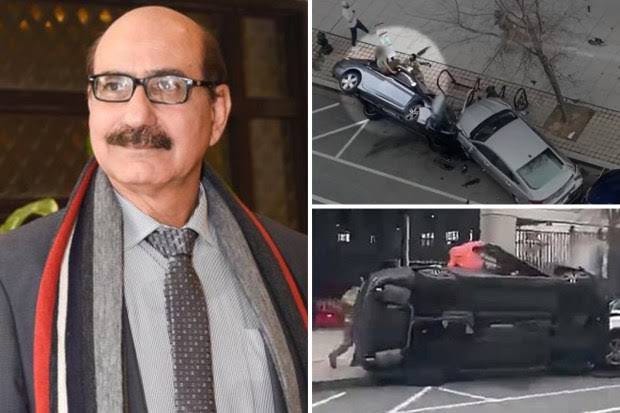
Radicalization isn’t a moment. It’s a process. However, there are definitely times when your road to radicalization is accelerated. There are also moments where you can say, without exaggeration, that something changed rather dramatically inside you. This is a story of one of those times which made me who I am today.
What story is it? That of Mohammad Anwar. Who was he and what happened to him? From Law & Crime:
Pakistani immigrant Mohammad Anwar, 66, was killed by the girl and her 13-year-old co-defendant during a botched carjacking on March 23 [2021].
And:
The teens attacked Anwar using a Taser and attempted to drive off with his car on March 23, D.C. police have said. As seen on graphic video, Anwar held on between the driver's seat and the open door while his vehicle sped down the street. The car crashed, tipping over onto the driver's side. The teens managed to climb out of the open passenger door alive, while Anwar was dying on the sidewalk.
Here’s the video of Anwar’s murder. Though you don’t see the exact moment he’s killed, it’s still gut-wrenching to watch:

Read this article from Daily Mail for a more detailed narrative of the incident, but I think I’ve shared more than enough for everyone to get the picture. The car takes off, Anwar hanging onto the driver’s side, the door striking a light pole as the carjackers attempt to escape. Then you hear tire-screeching, followed by a crash. You already know Anwar has suffered a terrible fate, the only question being how gruesome the crime scene will be as the cameraman races down the block.
Upon arrival, we see Anwar lying face-down, lifeless on the pavement. Somehow, you already know he’s dead. You see the soldiers helping the carjackers out of the car, with one of the girls screeching, “My phone!”, a very clear indication of where their priorities currently lie.
The video ends there, so we don’t see what happens afterwards. However, the sight of Anwar laying lifeless on the pavement, the commotion around him, soldiers everywhere, and not a single person coming to his aid, it makes a person very angry and cynical. What did he do to deserve this? Imagine your life ending in such an indecent fashion. Worst of all, the same country that pays you lip service as an immigrant regards your death as just another day in America.
True Empathy Isn’t Performative
Looking back on it, it’s ironic that this story affected me so deeply, that this is the singular moment, that Mohammad Anwar was the individual who sealed the deal on my journey to radicalization. I talk a lot about immigration, almost all of it negative. Yet, Mohammad Anwar was an immigrant. A Third World immigrant, to put it bluntly. The cynics might say that’s all he’d ever be to someone like me. But that’s not true.
Just because someone’s a Third World immigrant doesn’t mean I don’t see the humanity in them. Anwar was, in all likelihood, a decent man who genuinely wanted nothing more than to make a better life for himself and his family. He was in the country legally. He was a law-abiding citizen. He probably didn’t hate America, either. Older migrants, even from the Third World, tend to be more appreciative of America than younger migrants, far more so than their native-born offspring. With age comes wisdom, after all.
This is what it truly means to be empathetic. Empathy isn’t about ceding the moral high-ground to someone just because they might be less fortunate to us. Empathy isn’t about validation. It’s most definitely not about just giving someone everything they want because someone decided they’re victims and, therefore, good, and the rest of us are privileged and, therefore, bad. Empathy is about seeing the humanity in others, to understand that not everyone sees things the way we do, that the interests of others aren’t the same as ours. Empathy is to see that all lives matter, that race, gender, sexual orientation, matters little at the end of the day when it comes to an innocent man dying at the hands of another.
People like me understand this. It’s liberals who don’t. For liberals, empathy is an ideology, to be weaponized politically, like when protesting against immigration enforcement. Empathy is performative for liberals, a means of signalling virtue, since their biggest worry is that someone might see them as a bad person. Not because they truly want to do right by others, but because virtue-signalling is a key to status and success. In fact, liberals don’t really care about immigrants, do they?
This isn’t about immigration. This is about our country’s attitude towards, criminality, disorder, and race. There were a lot of people who tried shifting blame onto Anwar, saying that he should’ve not tried to stop his carjackers. These people are mostly liberals and they have a problem with conflating personal responsibility with moral culpability. Yes, Anwar took a great risk to his personal safety and paid the price for it. But that’s not the reason why he’s dead. This isn’t his fault.
It’s the fault of the two black girls who thought, using whatever rationalization they could muster, that stealing someone’s car was just another day on the job. Clearly, they knew what they were doing - one of the girls brought a taser along, and the only reason anyone would do that is because they expect violence or intend to commit violence. Being a minor is no defense.
It’s More Than “Just Property”
Liberals will use this incident as an example of how bad an idea it is to risk your life over property. They’ll highlight this one fact over the crime itself. Let me address this by first saying that unless someone’s pointing a gun in their face, I don’t trust anyone who says they’d willingly give up their property, their car, no less, the moment someone threatens them into doing so. It goes against our instincts, not to mention it’s not always a good idea. If we gave up our property every time someone tried to take it from us, we’d live in an even more anarchic society than we already do. If anyone can just come and take what they want any time, are we even really free? Wars have been fought to stop someone from marching in and just taking whatever they wanted.
What the “Just Property” folks also refuse to understand is that nobody has a responsibility, moral or otherwise, to make life easier for criminals. The decision to fight to protect property is based on practical, not moral, considerations. If some liberal chooses to let the bad people take whatever they want without a fight, that’s their choice. If someone else chooses to fight, that’s theirs. Choice is the most important thing to a liberal, right? Whether it’s advisable to fight to secure property is a separate matter. But moral culpability lies with the criminal, always. Nobody forced them to steal anything.
Humans are so spoiled by abundance and civilization, we value almost nothing. Lose something? Order a replacement off Amazon, it’ll arrive in two days. Sure you’ve got to spend money you otherwise wouldn’t have needed to spend, but you ought to be lucky you have money to spend, unlike your thief. Besides, human life, even that of a thief, even that of someone who threatened to hurt you over it, is worth infinitely more than anything you own.
Of course, if you go up to anyone, regardless of their political views, and try to take something from them, they’ll try to fight you as a first instinct. Eventually, they may cease their efforts once they realize they may not win the struggle. But this is less of a rational cost-benefit calculation they performed inside their heads and more of a realization of how far the thief is willing to go. In other words, letting it go becomes a matter of survival. But to capitulate is to acknowledge the thief’s power over them, to come to terms with one’s own vulnerability, and to confront the reality of what the world is like absent order. It’s all too much to bear, so they instead make up parables about how property isn’t worth human life, even that of the criminal. The fact that criminals don’t see it that way isn’t even worth consideration.
Also left unexplained is how someone’s supposed to just replace something as valuable as a car. For millions of Americans, myself included, a car isn’t just the most valuable property we own, it’s the most valuable property we’ll ever own. Anwar needed his car to make a living. In the old days, horse theft was a crime punishable by death. This is because our ancestors understood that a horse is what allowed a person to make a living, to travel, to survive. Take the means of doing so away, you’re putting someone’s welfare in jeopardy. Contemporary sensibilities delude us into thinking death as punishment for theft is barbaric, but what about theft itself? How’s that not barbaric? What about armed robbery? Isn’t that barbaric?
And please, don’t bring up insurance. One, not all insurance policies cover theft. Those that do are more expensive. Two, the whole point of car insurance is so it need not be used. Three, even if insurance covers theft, guess what? The cost of premiums increases! So even if you get your car back, it comes at the cost of having to pay even more in the future to protect your investment. If you can’t see the absurdity of this, save your breath, because you have nothing useful to contribute to this conversation.
I could go on and on about this, but my point is that you cannot build a cohesive, functional civilization when it’s perfectly normal for people to take from others without a fight. You cannot have civilization, period, if it becomes the norm that if someone wants to take from you, they can and you better step back lest you befall a fatal outcome. You don’t live in a civilization if the actions of someone like Mohammad Anwar undergoes greater scrutiny than that of his killers.
All Lives (Don’t) Matter
His murder also laid bare, with a shocking level of clarity, that not only do none of our lives really matter, your life is useful only if it can be politicized. If Mohammad Anwar could be made into a poster child victim of Islamophobia or xenophobia against immigrants, he’d be a martyr. But since he was killed by two black girls, and blacks sit atop the social hierarchy in America (for now, anyway), he’s just another casualty in this “experiment” of theirs. If that’d been two Whites who killed him, I’d think there wouldn’t only be greater outcry, especially considering we’d just come out of 2020 and all its moral panics, not to mention the first Trump presidency, but maximum effort would be put into trying to make something more of out of it.
I’ll talk about it in a separate essay, but America may have reached a point where blacks cannot monopolize the discourse or are even declining in influence, both culturally and as a political force. It’s hard to believe, but one of the few upsides to a diversifying America, its “browning,” as it were, is that far more groups are competing in the never-ending grievance wars. The American Left is inherently unstable, united only by opposition to the Right and “White supremacy.” The less prominent Whites become, the less of a force the Right becomes, the more these diverse groups will begin fighting amongst each other. It’ll have to happen, even as they continue scapegoating Whites. You can only fight who’s in front of you.
Back to Mohammad Anwar. His killers both received the maximum sentence through plea bargains which allowed them to avoid being tried for any of the other crimes they were charged with. I suppose that’s the best outcome which could be had; you can’t expect the system to deliver anything beyond what’s written into law. The problem is that both girls will eventually be released once they turn 21. This means both will be back amongst the general population within the next year or two. Was justice served? What does justice even look like in a case like this?
Incarceration, even juvenile detention, isn’t a pleasant experience. I’m well aware of that. The problem is that for a certain class of people, for a certain demographic, prison isn’t a punishment. It’s a rite of passage. I doubt any kind of gainful living awaits someone convicted of murder, even as children, so what are they to do? Go back to committing crimes? If so, then what was the point of releasing them? Even if they manage to reform themselves and become contributing members of society, do they feel any guilt for what they did? How they feel about their actions matters a lot. I can only hope they understand that this is a burden they can never truly cast off, that they’ll always be guilty, even if the feeling of guilt subsides.
So yes, in a few years, both of Anwar’s murderers, will be adults and out of prison. They’ll be able to live our their lives as free women, assuming they make the most of it and don’t manage to screw it up, which is highly unlikely. More likely is they’ll continue to screw up, commit more crimes, and ruin even more lives. It’s just a question of how much more they have to do before they really pay a price for any of it.
Anarcho-tyranny, the way our legal system courts disorder, is a core theme of my writing. This is, without a doubt, not only the most enduring problem in America, but it’s also the foundation of every other problem, including immigration. Anwar’s murder, the lack of public outrage and political reckoning, and the fact that a child can murder an adult and they become free just because they hit adulthood, none of it makes sense. It’s not supposed to, no. But if it doesn’t make sense, what’s the use? What are we doing here? And am I the only person who feels this way? This is the essence of my radicalism.
No system is perfect. But it’s difficult to deny that the purpose of American anarcho-tyranny is to make things make as little sense as possible:


Another incident which further validated my radicalism was the murder of Iryna Zarutska last September. Zarutska was a 23-year-old refugee from Ukraine who died at the hands of a career criminal aboard rapid transit in Charlotte, North Carolina. Her killer was black, too. Unlike Anwar’s murderers, he was a lifetime criminal. In both cases, the life of an immigrant suddenly didn’t matter because the identity of the perpetrator didn’t fit the narrative, and neither did that of the victim.
I really don’t know what more to say about this than I already have. This Substack is over four years old, and I’ve been talking about stuff like this since the very beginning. Anwar’s murder occurred before I started this blog. It’s that and so many other incidents which made me realize what kind of world we’re living in, and how nothing about this order is salvageable. I went from wanting to preserve our institutions to demolishing them because I see no other way of fixing any of this. Maybe it can’t be. I’m starting to come to terms with it. So should all of us.
May He Rest In Peace
Who would’ve ever guessed murders of immigrants would lead to my radicalization? At the hands of Americans, no less. As long as our country treats immigration as virtuous, immigrants as the best of us, a “gift,” as liberals call them, then we should make a big deal out of crimes committed against them and not just when it’s at the hands of a White man. Otherwise, all we’re proving is that the lives of immigrants matter only when they can be politicized.
Today is the fifth anniversary of Mohammad Anwar’s death. I can’t find any information on what’s become of his family since then. I can only hope they’re doing well, as well as they can, and that they have come to terms with it in some small form. For Anwar, we can only pray for his soul. For his murderers, they better be praying for theirs.
What about you? Do you consider yourself a radical? If so, what’s your radicalization backstory? What were the things that happened, the moments which led to your radicalization? What was your reaction to the murder of Mohammad Anwar? Was justice served? Discuss it in the comments.
Max Remington writes about armed conflict and prepping. Follow him on Twitter at @AgentMax90.
If you liked this post from We're Not At the End, But You Can See It From Here, why not share? If you’re a first-time visitor, please consider subscribing!
Like yours, my radicalization was gradual, but there were 2 major shifts:
I lost my libertarianism (an econ degree will give you that every time) as I realized a philosophy that wants markets for everything can't abide virtue. It could handle public goods and externalities but not "good" and "evil".
The largest change was in 2020 though. After the Summer of Floyd , I saw a charity whose pitch was "helping rebuild the BIPOC-owned businesses of Minneapolis". Without thinking, I mentally asked myself, "what about the white business owners?" It is the first moment in my entire life where I felt any sense of racial solidarity. I didn't like it. I still don't. But as the Left becomes ever more focused on ever smaller grievance groups, it's happening more and more.
And after they’re released, the jury on their next felony trial won’t be allowed to hear about this because they were juvies.
After half a century as a litigator, if I were king I could fix this shit in six months. Not gonna happen, so I have to be satisfied shouting at clouds.