Demanding Better While Settling For Worse
All I can say is this: don’t complain about a problem you intend to do nothing about except argue.
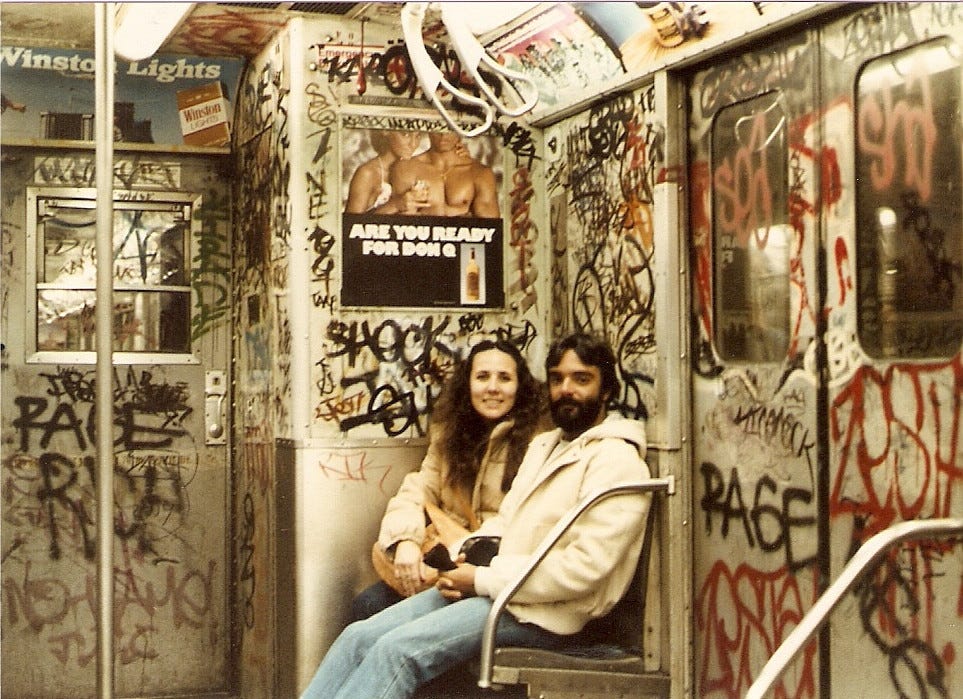
In my last entry, I discussed the trend of Americans leaving for other countries. Though I don’t expect this trend to last for long due to the deteriorating global security situation, it will sustain for at least a few years. Politics is often cited as the reason for emigration, but there are other, more practical reasons, like cost of living and safety.
Today, we’re going to look deeper into the issue of safety.
Crime: America’s Achilles Heel
Economics analyst Noah Smith discusses the main reason why America feels like it sucks to live in these days, for a lack of a better term. Contrary to popular opinion, it’s not because of a lack of health care
Extreme tolerance of public disorder, and downplaying the importance of crime, is a hallmark of modern progressive American culture. There are plenty of Democrats who care about crime — Joe Biden recently tried to increase the number of police in America by a substantial amount — but there is constant pressure from the left against such measures. On social media, calls for greater public order are instantly met with accusations of racism and classism
I know this is rude and uncouth of me to say, but it’s simply the truth: Noah Smith belongs to a group of liberals who serve as useful idiots for the Left. Useful in the sense that they make the Left seem more reasonable than it actually is, idiots in the sense that they not only lack influence in the faction compared to their more radical co-partisans, but also in the sense they pretend like they’ve uncovered some ground-breaking truth for the first time ever, when in reality, it’s what the rest of us, often on the Right, have been saying all this time.
Still, when you’re right, you’re right. Smith is correct in that disorder reigns supreme in America in a way it simply doesn’t in most, thought not all, places in the world. The rest of the world, even the Third World, tries to make an effort to establish some semblance of order. America doesn’t even try anymore.
Smith continues:
I am not going to claim that progressive attitudes are the reason America’s crime rate is much higher than crime rates in other countries. The U.S. has probably been more violent than countries in Asia and Europe throughout most of its history, and the divergence certainly long predates the rise of progressive ideology. It’s possible that the progressive prosecutor movement, the decarceration movement, and the depolicing movement exacerbated America’s crime problem a bit, but they didn’t create it.
What those progressive attitudes do do, I think, is to prevent us from talking about how important the crime problem is for the United States, and from coming up with serious efforts to solve it.
He’s not wrong. America’s crime and disorder problem cannot be blamed entirely on the Left. As he points out, we’ve always been arguably the West’s most violent country. This isn’t a fact I’ve ever shied away from and neither should anyone on the Right. Like all things in life, the actual risk of becoming a victim of violence is context-dependent, and there’s a lot of dis-/misinformation about the true nature of violence in the U.S. Still, it doesn’t change the fact the country is more violent than most in the West.
As Smith says, the real matter is that the Left is preventing us from having an honest conversation on the topic. It’s a familiar story at this point, isn’t it?
He addresses the commonplace belief that the U.S. doesn’t have healthcare because we don’t have a single-payer system:
The thesis of this post is that when you compare America to other countries, what stands out as America’s most unique weakness is its very high crime rate — not just violent crime, but also public chaos and disorder. That statement might come as a shock to people who are used to hearing about very different American weaknesses.
For example, it’s common to hear people say that Europeans and Asians “have health care”, and that Americans don’t. That’s just fantasy. Around 92% of Americans, and 95% of American children, have health insurance, and those numbers keep going up.
Smith concedes that American healthcare is expensive, with the caveat that the U.S. actually pays less in out-of-pocket costs, believe it or not, than even people in other rich countries. I think the benefit to the single-payer healthcare model in other countries is that it means a person can access healthcare more frequently, thereby enjoying preventative care, which contributes to greater life expectancy. At least, that’s the logic.
Speaking of life expectancy:
If not health care, what about health itself? America’s life expectancy has started to rise again, but it’s still 2 to 4 years less than other rich countries. The size of this gap tends to be overhyped — Germany’s life expectancy advantage over America is smaller than Japan’s advantage over Germany. And the difference is mostly due to America’s greater rates of obesity and drug/alcohol overdose — diseases of wealth and irresponsibility, rather than failures of policy. This stuff usually doesn’t affect quality of life unless you let it — if you don’t overeat, drink too much, do fentanyl, or kill yourself, your life expectancy in America is going to be similar to, or better than, people in other rich countries.
Things like obesity and drug/alcohol overdose cannot be fixed through preventative care, more frequent visits to the doctor. Everyone understands, from an early age, that eating right and not abusing drugs and alcohol is key to a long, healthy life. Yet people still manage to screw things up. This suggests there’s something else, something beyond the scope of this essay, going on, leading to poor health outcomes in the U.S.
Moreover, as Smith says, the difference in life expectancy isn’t dramatic. We’re not talking about a difference of a full decade or more. Not to mention it’s not necessarily a good thing for so many people to live a long time - in countries like Germany and Japan, who have reputations as some of the healthiest places in the world, Alzheimer’s and dementia are a leading cause of death. What’s the point of living so long if you end up just losing your mind in the end or forget the names and faces of your loved ones? But I digress.
I had a conversation with a family member over the weekend who was reading a memoir written by a Dutch man. Part of his story involved his dealings with the Dutch social welfare system, an envy among American cosmopolitan liberals. The TL;DR of the story that it’s easy to be romantic about something like that when you don’t actually need to navigate the bureaucracy. Moreover, nothing, not even European social welfare systems, are free. Eventually, the money does run out.
Smith addresses other commonly held assumptions about the U.S., but let’s circle back to crime and disorder by addressing the issue of public transportation [bold mine]:
How about transit and urbanism? Here, America is certainly an exception. The U.S. has the least developed train system in the developed world, and worse than many poor countries as well. America is famous for its far-flung car-centric suburbs, with their punishing commutes and paucity of walkable mixed-use areas. Only a few rich countries are more suburbanized than America, and those countries tend to have very good commuter rail service.
This is a real difference, though whether it’s good or bad depends on your point of view. Lots of people in America and elsewhere love suburbs and love cars. But I’m going to argue that to the extent that America’s urban development pattern is more suburbanized and more car-centric than people would like, it’s mainly due to crime.
In my own essay about the un-walkability of the U.S., I said:
The reason why mass immigration has become the defining issue in Europe is because the entire continent was such a safe place until Third Worlders began showing up en masse. Even now, despite the extreme savagery of these Third Worlders, Europe is still a safer place than the U.S. Mass immigration certainly doesn’t help, but I’ll level with liberals in saying that America’s violence problem cannot be blamed on immigration. We were a violent country even during more homogeneous times.
Of course, the blame for a lot of our violence falls on the black community. This is the thing most people throughout the world don’t understand - our rates of crime are driven by this one group alone. It’s not Whites who are doing the vast majority of our killing. In addition, blacks populate much of our urban centers. As long as this toxic combination remains intact, cities can never be safer places.
…
Even as a greater proportion of the population, Whites are still grossly underrepresented in crime and violence. I’m not sure how much longer we can keep pretending like this connection doesn’t exist, or that it’s the fault of White supremacy. No matter the reason, cities where downtowns are routinely overrun by violent “youths,” a often-used media euphemism for young blacks, aren’t going to draw anyone in, no matter how walkable it might be.In fact, one of the reasons the demand for suburban living never waned is because of how dangerous American urban areas became during the 1960s-onward. Cities today are less White than they’ve ever been because they departed generations ago due to crime. There’s a saying which goes something like, “The goal of American life is to make as much money as possible to get away from the consequences of the Civil Rights Act.” Even liberals refuse to live in areas with lots of blacks, though they cite safety, not racial animus, as their reason for doing so, as if safety has nothing to do with the kinds of people who live in a certain area.
I re-post those paragraphs here because someone like Smith isn’t going to be anywhere near as blunt as I am. Still, we’re talking about the same thing, even if Smith cannot be so pointed.
How much more violent is the U.S.? This much:
This is an astonishingly huge difference. America’s murder rate is between five and ten times as high as that of most rich countries.
After showing that crime has come back down, Smith notes this is no consolation:
But even after this decline, the U.S. homicide rate is still five to ten times higher than other rich countries! The recent improvement is welcome, but it hasn’t yet changed the basic situation.
This gets to what I often say: America is probably as safe as it’s ever been, yet danger is present all around us. I caution against paranoia, if only because humans cannot operate at Condition Red at all times, but far too many Americans operate at Condition White (oblivious, in denial) even when outside their homes. If you’re not at least looking around every once in a while, you’re doing it wrong.
This brings us to the real problem in the U.S., which isn’t crime rates, but disorder. This is the crux of Smith’s argument:
The tragic and disturbing scenes of mentally compromised people shouting, peeing, pooping, defacing property, and acting menacing in public — so familiar to residents of cities like San Francisco — are not entirely unique to America. I have been to a place in Vancouver that has similar scenes, and twenty years ago I even walked through a dirty and dangerous-seeming homeless camp in Japan. But overall, the differences between the countries are like night and day, and other countries seem to have made a concerted effort to bring order to their streets in recent years.
Smith spends some time addressing the attitude of radical leftists who seem to think disorder is perfectly tolerable. Since not only did he do the heavy-lifting on that front, but that radical leftists have nothing useful to say nor should they ever be part of the solution, we’ll ignore them as we should.
Smith says people are right to feel the way they do about our cities, that there shouldn’t be this big taboo about reacting with disgust and fear:
Obviously, unsheltered homelessness and public disorder aren’t the same thing — you can have lots of violent or threatening people on the streets who do have homes, and most homeless people are harmless. But homeless people do commit violent crime at much higher rates than other people, so when people walk down the street and see a bunch of seemingly homeless people, they’re not wrong to be scared.
We can disagree on what needs to be done about homelessness and the surplus of crazy people on the streets. But this policing of thought by the radical left needs to be stopped and if it takes “centrist” liberals like Smith to get it done, that’s what it takes. Our society’s obsession with how people react to things they observe in the world is insane. Being repelled by the sight of chaos, filth, and squalor in our neighborhoods isn’t worse than the chaos, filth, and squalor itself. End of discussion.
Smith circles back to the topic of crime, explaining that “White Flight” was driven less by racism and more by escalating levels of crime and disorder in American cities beginning in the 1960s. This is as close as he gets to drawing a racial correlation, but it’s good enough. Whites, blacks, nobody has an obligation to stay and tough it out as their neighborhoods deteriorate, as their kids grow up in increasingly dangerous environments. This is why cities like Los Angeles went from being almost 50 percent White in 1980 to less than 30 percent today.
One simply cannot have nice things in environments filled with crime and disorder [bold mine]:
Crime also makes it a lot harder to build good transit systems. Trains are a public space, and when there are violent, destructive, or menacing people on the train, it deters people from wanting to ride the train. There’s research showing this, but I also thought that a recent post by the blogger Cartoons Hate Her was especially vivid in explaining how the fear of disorder keeps women and parents away from transit:
…
In fact, we have evidence that this fear is very rational. When BART [Bay Area Rapid Transit] installed ticket gates at their train stations that prevented people from riding for free — over the loud objections of progressives — crime on the train went down by 54%, and the amount of disorder and bad behavior on the train absolutely collapsed:
…
Fear of crime — often rational fear — also stops people from allowing train stations and bus stops in their neighborhood in the first place. There are a number of studies linking train stations and bus stops to increased crime, both in the immediate area and at areas linked to the same transit line. Criminals ride the bus and the train, so in a high-crime country like America, people don’t want trains and buses in their neighborhood. This is probably a big reason why almost no U.S. city has a good train system.In other words, while car-centric suburbanization is partially about people wanting lots of cheap land and big houses and peace and quiet, part of it is a defense-in-depth against America’s persistently high crime rates.
Smith ought to be careful - he’s sounding an awful lot like some far-right survivalist these days. Seriously, he’s correct on all points. You can build the nicest infrastructure in the world, but you cannot expect people to use it if they feel as thought they’ll need to be on guard at all times while doing so. I live in a city with an excellent, extensive rapid transit system. It works well in part because crime rates where I live are quite low. Even then, every now and then, you come across an unseemly character. I can’t tell you how much even one such person can completely change the complexion of the train ride.
As an American, when you go to a European city or an Asian city — or even to Mexico City — and you see pretty buildings and peaceful clean streets and there are nice trains and buses everywhere, what you are seeing is a lack of crime. The lack of crime is why people in those countries ride the train, and encourage train stations to be built in their neighborhoods instead of blocking them. The lack of crime is why people in those countries embrace dense living arrangements, which in turn enables the walkable mixed-use urbanism that you can enjoy only on vacation.
I’m less interested in places like Europe and more interested in the developing Second World because they still manage to do better than the U.S., despite higher crime rates overall. The thing about these countries is that they understand you cannot simply ignore disorder and hope it’ll go away. Because these countries are more dysfunctional and violent, it has the ironic effect of making the consequences of tolerating disorder that much more blunt.
As a result, you actually see more segregation in places like Latin America, more of a contrast between the good and bad neighborhoods. If the problem cannot be outright eliminated, it at least needs to be contained. If that means heavy-handed policing, so be it. If the military has to go in and sweep out bad neighborhoods, that’s what it takes. In Cabo San Lucas, a popular tourist destination for Americans in Mexico, police are everywhere, some holding those dreaded “assault rifles.” If you think America is a violent country, there’s no arguing against a similar presence to maintain safety and order here. Of course, many people in these other countries don’t like it, but every society needs its share of civil rights activists, I guess.
Having been to cities like Mexico City, capital of a country run by violent drug cartels, Medellin, a city made famous by Pablo Escobar, Rio de Janeiro, where running gun battles are part of the landscape, I can tell you the safe areas are so because there’s more police, not less. By contrast, in places like Europe, there’s greater safety in public despite less police. This is because society itself is more tranquil. Whatever the reason, whatever the means, you do what it takes to make it safe. Only in America does there seem to be so much quibbling over whether it’s worth it to do so, which is strange, since America can be so unsafe and crazy.
Smith closes with a bang:
As for the root causes of American crime, and what policies might bring it down to a more civilized level, that’s the subject for another post. The point of today’s post is simply to say that we can’t ignore our country’s sky-high crime rates just because we’ve lived with them our whole lives. Nor should we comfort ourselves with the fact that crime is down from the recent highs of 2021. We are still living in a country that has been devastated by violence and public disorder, and which has never really recovered from that. Someday soon we should think about getting around to fixing it.
I’d go as far as to say America never really recovered from the Great American Crime Wave beginning in the 1960s and ending in the mid-1990s. We think of the ‘90s as some golden age in America, and culturally, it was. But I also remember our cities were pretty dreadful places back then. In fact, many them became better to live in beginning in the 2000s into the early 2010s, when crime had fallen so much, people, young people especially, felt comfortable moving back, thereby revitalizing neighborhoods. Since then, we’ve only regressed, proving how how-earned and easily lost the gains are.
At the end of his essay, Smith makes note of a study recently published by a Vanderbilt University and a Wellesley College academic, showing that electing a Republican prosecutor leads to not only fewer deaths among males of all races, but also reduces gun violence! What’s more, electing far-leftists as prosecutors invariably leads to more crime! Who would’ve thought? Again, there’s nothing complex about crime.
Are we done pretending like it is, though? Probably not. Americans are much too addicted to disorder and they’ll need another heavy hit of the hard stuff eventually. The only question is how many overdoses it’ll take before Americans realize they’re not going to live for much longer if they can’t kick the habit. More importantly, how many more overdoses will we survive?
I know I started off insulting Smith, but I’ll end by telling you all to read his essay. He makes a lot of sense and puts data behind his words. Though my hope of us ever bridging the political divide is less than zero at this point, it’s important to have a dialogue as long as we haven’t started shooting each other yet. I think the key implication of Smith’s commentary is that America would be an absolutely wonderful place to live if it not for crime and disorder.
Failing To Be Civilized
Echoing similar themes, Chris Arnade says:
You can learn more about the U.S. by traveling overseas and comparing, and five years of that has taught me we accept far too much public disorder.
I’ve written about this many times before, because it is so striking, and it has widespread consequences, beyond the obvious moral judgement that a society should simply not be this way.
It’s a primary reason why we shy away from dense walkable spaces and instead move towards suburban sprawl. People in the U.S. don’t respect, trust, or want to be around other random citizens, out of fear and disgust. Japanese/European style urbanism—density, fantastic public transport, mixed-use zoning, that so many American tourists admire—can’t happen here because there is a fine line between vibrant streets and squalid ones, and that line is public trust. The U.S. is on the wrong side of it. Simply put, nobody wants to be accosted by a stranger, no matter how infrequent, and until that risk is close to nil, people will continue edging towards isolated living.
It is why we “can’t have nice things” because we have to construct our infrastructure to be asshole-proof, and so we don’t build anything or build with a fortress mentality, stripping our public spaces down to the austere and utilitarian, emptying them of anything that can be vandalized.
Arnade discusses the unnecessarily controversial topic of whether we should tolerate public urination:
No, the rest of the world doesn’t tolerate the amount of antisocial behavior we in the U.S. do. If someone were to piss on a subway anywhere else in the world, and very very few ever would want to (more on why below), they are removed from society for a period of time.
We however let people who aren’t mentally competent continue to engage in self-destructive and aberrant behavior without removing them, which consequently ruins it for everyone else, except those wealthy enough to build their own private islands of comfort.
Someone peeing on the subway is not of sound mind, and it isn’t normal behavior by any measure. It’s a sign of distress that should cause an intervention—by police, social workers, whoever—that mandates them into an institution for a period of time, until they regain sanity and stability. For someone actively psychotic —civil commitment to psychiatric hospital. For violent individuals refusing treatment—secure prison facilities with mandatory programs. For severe addiction—medical detox and residential treatment without the ability to walk away.
They should not be allowed to do whatever they want because they cannot control themselves enough to have that freedom. Someone shouting at strangers, someone washing themselves with flour tortillas, someone punching at the air voicing threats shouldn’t, for their own safety and others, be out roaming the streets.
It isn’t fair to the public, especially the working people who have to deal with them on a daily basis. It isn’t fair to the person themselves. The idea that it is empathetic to allow someone to suffer on the streets tortured by their inner demons, covered in filth, high as a kite, is so backwards and immoral that I cannot believe that the activists and politicians who support it have spent any time around these people. They need help, and if they don’t accept it, then you must force them to get help.
I shouldn’t be, yet I’m still surprised this is such a taboo topic. Why is it bad to think we shouldn’t have people urinating out in public? Why should we have any more sympathy for the crazy or homeless than for any other? Do we all live by the same set of rules or not? Americans are a far more empathetic people than given credit for, but we can see how easily that empathy can be exploited. For one, it can lead to different rules for different people, something that makes civilized living impossible.
Arnade talks about what Seoul is like [bold mine]:
I walked twelve miles through Seoul yesterday, and I saw zero destitute people. Certainly no homeless. I did see the same group of drunk men I always see, playing cards near the river, because Koreans drink an immense amount, but as far as daytime drunks go, their behavior was exemplary. When they had to piss, they walked the two hundred yards to the bathroom, which they left as clean as when they came. When they threw away their empty bottles, they collected them and walked it to the trash can, even putting them into the correct bin.
Almost no Korean, as in not a single one, even the drunks, would ever think of peeing on the metro, even if they could somehow get away with it.
That they’d be punished is part of why they don’t do it, but there’s a chicken-and-egg problem: Which came first, the culture or the enforcement? Koreans are raised to be good citizens and not break rules, with public shame as enforcement. Legal consequences exist, but culture does most of the work, so laws rarely need enforcing.
I implied earlier that we can either have an orderly society one of two ways: through enforcement by any means necessary, or by having a culture of orderliness. America has rejected both: since enforcement means violence, and we abhor violence except against racists, we don’t want enforcement. Since order is for fascists, we court chaos instead.
I’m not being facetious, either. This is how Americans think. American culture as it exists today, when stretched to its logical conclusion, can only lead to disorderliness as the norm:
The U.S. has a different model that emphasizes individuality over the communal, with our thick culture focused not on being a good citizen first, but finding our true self and exploring that, and hopefully making a lot of money along the way — Koreans are citizens, we are entrepreneurs. That is one of our greatest strengths, and has served us well economically and artistically, and it is why so many Koreans find the U.S. liberating and refreshing.
Yet a result of the American model is a wider distribution of behavior, including fatter extremes, with a far larger amount of people prone to antisocial tendencies, and I would argue, mental illness. Some people need strict social guidelines, and without them, they can literally go crazy. We don’t have that.
Earlier, I said we cannot have different sets of rules for different people. But we also need to understand that different people need different ways of being influenced. For most people, telling them not to do something is enough. For someone who refuses to be told what to do, what do you do? There has to be some other way of getting them to play by the same set of rules. But in America, we’ve decided that the most we can do is ask nicely, and if they refuse, we just let them be, it’s not worth the fight. Someone could die, after all!
On X, Arnade explains why we can’t have nice things in America:
We don’t have public restrooms because they’d be trashed in days.
We don’t build bus stops because they’d become homeless shelters.
We don’t have dense walkable cities because nobody wants to be accosted by strangers.
This is because we have chosen to accept public disorder, and as the rest of the world shows, it doesn't have to be that way
Liberals would say that we can’t punish everyone for the actions of a few. But we do it all the time. Criminals are routinely given light sentences or released early so they can commit more crimes against the rest of us. Illegal immigrants have been allowed to stay because it’s not fair to prioritize Americans in their own country. It’s stupid for Americans to constantly advocate for the minority, for the stragglers, and expect a high-quality outcome. The only reason to keep your standards low is because you expect little in return.
Arnade doesn’t offer much in the way of solutions, unfortunately:
If our elevated levels of addiction and mental illness are consequences of our culture of individuality, as I believe they are, then we have a moral responsibility to take them off the streets and care for them — for those broken by our celebration of freedom, like John, and more importantly for the working people navigating around them.
Sure, it’s a solution. But Americans have already rejected taking them off the streets. Any large-scale attempt to clean-up the streets would go as well as the Trump administration’s mass deportation campaign or deployment of National Guard to the country’s violent cities. Ironically, these kinds of things seem to go better under Democratic administrations, like when California Governor Gavin Newsom managed to make San Francisco look like a nice place for a few days because Xi Jinping was in town. But that’s because being publicly opposed to such policies is precisely what gives them cover to do so. Either way, they’ll do just enough to maintain the veneer of civilization. Illegal immigration got worse under the Obama administration despite being the “Deporter-In-Chief” and San Francisco went back to being San Francisco after the Chinese president departed.
It’s what makes it all so frustrating. These aren’t difficult problems to fix. Yet Americans have been successfully psy-opped into believing they are. In fact, part of being an American these days, even as an immigrant, is to assimilate into this way of thinking: that things like crime and disorder are complex, nuanced issues, therefore, there’s no fixing it. We spend exponentially more time arguing over it than actually doing anything about it. Anyone preoccupied with how the world sees America ought to be most worried first and foremost about how inept we are at fixing the most fundamental of problems, not about how embarrassing Trump acts or whatever.
As you might have figured, I’m done trying to convince anyone we’re on the wrong path. Those inclined to agree will, those disinclined to agree won’t. All I can say is this: don’t complain about a problem you intend to do nothing about except argue.
All we can also do is to tell Americans that you can only have what you’re willing to pay for. On X, Arnade also said:
You can’t have dense walkable cities if people don’t respect, trust, and want to be around other random citizens.
As I wrote years ago, the reason why Japanese/European style urbanism (density, fantastic public transport, mixed-use zoning, that so many American tourist admire) can't happen here is because there is a fine line (public trust) between vibrant alive streets, and squalid, fetid, and lurid ones, and US is on the wrong side of that line.
This isn’t just a dense big city issue though -- the acceptance of disorder has made most downtowns, various neighborhoods, and public transit, of every US city (mid-sized and small), a scene that would shock Europeans/Asian visitors and should shock Americans.
Simply put, nobody wants to be accosted by a stranger -- no matter how infrequent -- and policy makers simply shouldn’t tolerate it.
People in other countries are wary of strangers too. However, there isn’t this total paranoia about them, either, like there is in the U.S. Americans like to say that they don’t view strangers with suspicion, but behind closed doors, they say different, not to mention their behavior suggests otherwise. This is the result of a combination of the atomized nature of American society and also because America was once a more violent country, and the “generational trauma,” for a lack of a better term, it caused makes Americans especially wary of those whom they don’t recognize.
Most Americans are perfectly content to leave one another alone. The problem is that some people make it their business to trouble others, even when not in direct interaction. If the smell of urine and a screaming crazy is what we have to look forward to when stepping outside, most people, whether they want to confess or not, will stay indoors. As for the suggestion we just keep ignoring it and leaving people alone, the fact that we do so because to do otherwise would put ourselves at risk is conveniently ignored. It’s almost like an implied threat: look straight ahead, keep walking, and you’ll be fine. Almost like we’re in boot camp, or worse, prison.
Closing Thoughts
As we finish this up, I come across this story out of California:
A woman known for feeding the homeless each week in MacArthur Park was savagely attacked with a metal pipe while serving meals, leaving her with a shattered jaw and six teeth knocked out, according to a fundraiser created to help cover her mounting medical bills.
The GoFundMe page, organized by Catherine Schetina on behalf of longtime volunteer Eva Woods, says the violent attack happened during the group’s regular Sunday lunch service in the park in late February.
The suspect approached Woods from behind without warning and struck her in the face with a metal pipe, according to the fundraiser.
Feeding the homeless is a noble act. Millions of homeless are fed daily without altercation. But when something does happen, it’s quite savage, beyond the means of compassion to deal with. That’s why compassion isn’t a solution. It’s not to say we can’t nor shouldn’t treat the homeless or anyone else without it, but it’s to say it doesn’t fix anything. The problem is, we settle for feeling like we did good instead of actually achieving long-lasting outcomes every civilized person can enjoy the benefits of. That requires an iron hand. But that’s mean!
It’s funny - I feel like I’ve said everything there’s to say about crime and disorder in America. Yet, there always seems to be something to say. It signifies how enduring the problem is, how it’s something likely to remain with us long after all our other problems have been settled.
This is very much a cultural problem as much as it’s a political one. Americans have to want something different for themselves. They have to want it so bad that to rationalize doing something else or nothing at all is unthinkable. I’m running out of ways that’s ever going to happen in America. I just know it’s not going to happen on its own.
Meanwhile, Americans will tolerate the decay of their society, pretending like they don’t notice. When they choose to do so, they’ll blame it on their favorite villain - conservatives, men, White people. Some will move overseas for safety and lower costs of living, marvel at what the rest of the world manages to maintain, and wonder aloud, WHAT’S AMERICA DOING WRONG???
What are your thoughts on America’s disorder addiction? Can we ever kick it? Does it mean anything that liberals like Noah Smith are speaking out more bluntly about the problem? Or will the radicals keep getting their way? Share your thoughts in the comments.
Max Remington writes about armed conflict and prepping. Follow him on Twitter at @AgentMax90.
If you liked this post from We're Not At the End, But You Can See It From Here, why not share? If you’re a first-time visitor, please consider subscribing!
"People say we need religion when what they really mean is we need police." ~ H. L. Mencken
Great essay about a sad reality 👍